Understanding IIoT Architecture Explained: Devices, Edge, Cloud & Analytics in Factory Automation & Process Control
What are the main layers of IIoT architecture? and Which communication protocols are commonly used in IIoT?
 Explore Automation Solutions
Shop Process Control Equipment
IIoT Architecture Explained: Devices, Edge, Cloud & Analytics
Understand how Industrial Internet of Things (IIoT) architecture connects machines, data, and people to create smarter, safer, and more efficient industrial operations.
The Industrial Internet of Things (IIoT) has fundamentally changed how industrial facilities collect, process, and use operational data. Today’s factories, power plants, oil refineries, water treatment facilities, and logistics centers are no longer isolated environments where machines operate independently. Instead, they are becoming interconnected ecosystems in which equipment continuously communicates, analyzes data, and supports intelligent decision-making.
At the heart of this transformation lies IIoT architecture—a structured framework that connects field devices, industrial networks, edge computing, cloud platforms, and advanced analytics into a unified system.
Whether you’re implementing predictive maintenance, remote asset monitoring, digital twins, or a smart factory initiative, understanding IIoT architecture is essential. A well-designed architecture not only improves operational efficiency but also strengthens cybersecurity, reduces downtime, and enables organizations to scale digital transformation initiatives with confidence.
This comprehensive guide explains every layer of an IIoT architecture, from intelligent sensors on the factory floor to cloud-based analytics platforms that generate actionable business insights.
What Is IIoT Architecture?
Industrial Internet of Things (IIoT) architecture is the structured framework that defines how industrial devices, communication networks, computing platforms, applications, and users interact to collect, process, store, and analyze operational data.
Unlike consumer IoT systems, IIoT architectures are designed for mission-critical industrial environments where reliability, deterministic communication, cybersecurity, and real-time performance are essential.
An effective IIoT architecture connects operational technology (OT) with information technology (IT), enabling production data to flow securely from machines on the plant floor to engineers, operators, maintenance teams, and business executives.
Rather than relying on isolated automation systems, modern industrial organizations build connected infrastructures that support:
Predictive maintenance
Condition monitoring
Energy optimization
Asset management
Quality control
Production optimization
Remote monitoring
Artificial intelligence applications
The result is a manufacturing environment where decisions are based on real-time operational intelligence instead of assumptions.
Why IIoT Architecture Matters
Many industrial facilities already collect enormous amounts of operational data. However, without a structured architecture, much of that information remains trapped inside individual PLCs, SCADA systems, or proprietary control equipment. IIoT architecture solves this challenge by creating standardized pathways for data collection and analysis.
Organizations implementing a well-designed IIoT architecture can achieve:
Reduced equipment downtime
Better asset utilization
Faster maintenance response
Improved production efficiency
Lower operating costs
Enhanced workplace safety
Better product quality
Real-time operational visibility
Instead of reacting to failures after they occur, companies gain the ability to predict problems before they interrupt production.
The Layers of IIoT Architecture
Although implementations vary across industries, most IIoT systems follow a layered architecture.
These layers include:
Device Layer
Connectivity Layer
Edge Computing Layer
Cloud Platform Layer
Data Analytics Layer
Enterprise Application Layer
Each layer performs a specific role while working together as part of a connected ecosystem.
Device Layer – Where Industrial Data Begins
The device layer represents the physical equipment installed throughout an industrial facility.
This includes:
PLCs
Industrial sensors
Pressure transmitters
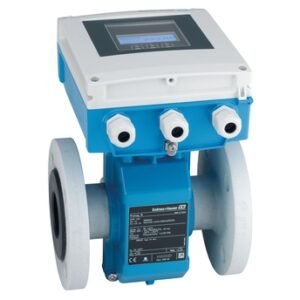
Flow meters
Temperature transmitters
Level sensors
Vibration sensors
Industrial robots
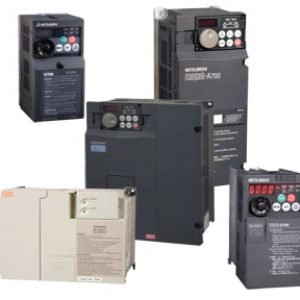
Variable Frequency Drives (VFDs)
Motor control centers
Smart electrical meters
RFID readers
These devices continuously monitor process variables and equipment health.
For example:
A pressure transmitter measures pipeline pressure.
A vibration sensor monitors motor bearings.
A flow meter measures liquid throughput.
A temperature transmitter tracks furnace temperatures.
Each device generates operational data that becomes the foundation for higher-level analytics.
Without accurate field data, no IIoT system can provide meaningful business intelligence.
Smart Sensors vs Traditional Sensors
Traditional industrial sensors simply measure physical values.
Smart sensors go much further by offering:
Built-in diagnostics
Digital communication
Self-calibration
Health monitoring
Predictive maintenance information
Because of these capabilities, smart sensors reduce maintenance costs while improving data quality.
Connectivity Layer – Moving Data Securely
Once data has been collected, it must be transmitted reliably throughout the industrial network. The connectivity layer provides communication between devices.
Common industrial protocols include:
Ethernet/IP
PROFINET
Modbus TCP
Modbus RTU
OPC UA
MQTT
EtherCAT
CAN Bus
Unlike consumer networking technologies, industrial communication protocols prioritize deterministic communication, redundancy, and reliability.
Network infrastructure often includes:
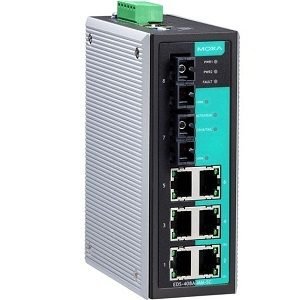
Managed Ethernet switches
Industrial Wi-Fi
Fiber optic networks
Cellular gateways
Wireless sensor networks
Choosing the appropriate communication protocol depends on application requirements, latency, and cybersecurity considerations.
Edge Computing Layer – Intelligence Close to the Machine
One of the biggest developments in IIoT is edge computing. Instead of transmitting every data point directly to the cloud, edge devices process information locally.
Edge computing devices include:
Industrial gateways
Embedded industrial computers
Edge servers
Intelligent PLCs
Edge computing offers several advantages.
Reduced Latency
Real-time control decisions occur locally instead of waiting for cloud responses.
Lower Bandwidth Costs
Only valuable information is transmitted to cloud platforms.
Improved Reliability
Operations continue even when internet connectivity is unavailable.
Enhanced Cybersecurity
Sensitive production data can remain inside the facility.
For industries requiring millisecond response times, edge computing has become an essential part of IIoT architecture.
Cloud Layer – Centralized Industrial Intelligence
Cloud computing enables organizations to aggregate information from multiple production sites into a centralized platform. Rather than storing data on individual servers inside each factory, organizations can securely manage industrial information in scalable cloud environments.
Cloud platforms support:
Long-term data storage
Fleet management
Multi-site monitoring
Machine learning
AI model deployment
Enterprise reporting
Remote diagnostics
Cloud computing also simplifies software updates while reducing on-premises infrastructure costs. Many manufacturers now combine private cloud and hybrid cloud architectures to balance security with scalability.
Analytics Layer – Turning Data into Action
Collecting data alone provides little value. The analytics layer transforms raw industrial information into meaningful insights.
Modern analytics platforms perform:
Descriptive Analytics
Understanding what has already happened.
Examples:
Equipment utilization
Production output
Downtime reports
Diagnostic Analytics
Understanding why events occurred.
Examples:
Root cause analysis
Failure investigations
Predictive Analytics
Forecasting future equipment failures using machine learning.
Examples:
Bearing failure prediction
Remaining useful life estimation
Prescriptive Analytics
Recommending optimal actions.
Examples:
Maintenance scheduling
Production optimization
Energy management
These capabilities allow organizations to shift from reactive maintenance toward predictive and prescriptive maintenance strategies.
Enterprise Applications Layer
The highest level of IIoT architecture connects operational systems with enterprise software.
Common enterprise applications include:
Enterprise Resource Planning (ERP)
Manufacturing Execution Systems (MES)
Computerized Maintenance Management Systems (CMMS)
Asset Performance Management (APM)
Quality Management Systems (QMS)
Integrating operational and business systems enables executives to make informed decisions based on real-time production data.
Cybersecurity in IIoT Architecture
As industrial environments become increasingly connected, cybersecurity becomes one of the most important design considerations.
Industrial cyberattacks can result in:
Production downtime
Equipment damage
Financial loss
Safety incidents
Regulatory violations
A secure IIoT architecture should include:
Network segmentation
Zero Trust security principles
Device authentication
Multi-factor authentication
Encryption for data in transit and at rest
Continuous vulnerability monitoring
Security information and event management (SIEM)
Cybersecurity should be incorporated into every architectural layer rather than treated as an afterthought.
IIoT Architecture Across Different Industries
Although the core architecture remains similar, implementations vary depending on operational requirements.
Manufacturing
Manufacturers use IIoT for predictive maintenance, quality inspection, robotic automation, and production optimization.
Oil and Gas
IIoT supports remote monitoring of pipelines, drilling equipment, compressors, and storage facilities.
Power Generation
Utilities monitor turbines, transformers, substations, and renewable energy assets.
Water and Wastewater
Operators remotely monitor pumps, reservoirs, chemical dosing systems, and distribution networks.
Food and Beverage
IIoT improves traceability, regulatory compliance, equipment reliability, and energy efficiency.
Emerging Trends in IIoT Architecture
IIoT continues to evolve rapidly. Several technologies are shaping the future.
Artificial Intelligence
AI models automatically detect anomalies and optimize production.
Digital Twins
Virtual replicas simulate industrial equipment before physical changes are implemented.
5G Connectivity
Ultra-low latency networks improve industrial mobility and autonomous systems.
Autonomous Operations
Factories increasingly use AI-powered systems capable of making operational decisions with minimal human intervention.
Sustainable Manufacturing
IIoT supports energy optimization, emissions monitoring, and environmental compliance.
Best Practices for Designing an IIoT Architecture
Organizations planning an IIoT deployment should consider the following best practices:
Define clear business objectives before selecting technology.
Standardize communication protocols wherever possible.
Design for scalability so additional devices can be integrated easily.
Incorporate cybersecurity from the outset.
Use edge computing for time-critical applications.
Establish robust data governance policies.
Integrate IIoT platforms with existing ERP, MES, and maintenance systems.
Continuously monitor performance and refine the architecture based on operational insights.
A phased implementation approach often delivers better results than attempting to digitize every process simultaneously.
Recommended Related Articles
- Industrial Automation Fundamentals
- Industrial Communication Protocols
- Industrial Instrumentation Control
- Industrial Networking & IIoT
- Industrial Sensors & Measurement
- Motion and Process Control
- PLC Programming & Controllers
- SCADA and DCS Systems
- Servo Motors and Motor Drives
Frequently Asked Questions (FAQ)
What is IIoT architecture?
IIoT architecture is the structured framework that connects industrial devices, communication networks, edge computing, cloud platforms, analytics, and enterprise applications to collect and use operational data efficiently.
What are the main layers of IIoT architecture?
The primary layers are the device layer, connectivity layer, edge computing layer, cloud layer, analytics layer, and enterprise application layer. Together, they enable data to flow securely from industrial equipment to business systems.
What is the difference between IoT and IIoT?
IoT typically focuses on consumer devices such as smart homes and wearable technology, while IIoT is designed for industrial environments where reliability, real-time performance, and cybersecurity are critical.
Why is edge computing important in IIoT?
Edge computing processes data close to industrial equipment, reducing latency, lowering bandwidth usage, improving reliability, and enabling faster decision-making even when internet connectivity is limited.
Which communication protocols are commonly used in IIoT?
Common protocols include OPC UA, MQTT, Modbus TCP, Modbus RTU, PROFINET, EtherNet/IP, EtherCAT, and CAN Bus. The best choice depends on the application’s performance, interoperability, and security requirements.
How does cloud computing improve industrial operations?
Cloud platforms centralize data from multiple facilities, making it easier to monitor assets, perform advanced analytics, deploy AI models, and generate enterprise-wide reports while supporting remote access and scalability.
Is cybersecurity necessary for every IIoT deployment?
Yes. Every IIoT deployment should include robust cybersecurity measures such as network segmentation, encryption, device authentication, continuous monitoring, and Zero Trust principles to protect industrial assets and operational data.
What industries benefit most from IIoT architecture?
IIoT delivers significant value across manufacturing, oil and gas, power generation, mining, pharmaceuticals, food and beverage, water and wastewater, logistics, and renewable energy by improving efficiency, reliability, and operational visibility.
IIoT architecture is much more than a technology stack—it is the digital foundation of modern industrial operations. By integrating intelligent field devices, resilient communication networks, edge computing, cloud platforms, and advanced analytics, organizations can transform raw operational data into actionable intelligence.
As industrial facilities continue to pursue smart manufacturing and digital transformation initiatives, a well-designed IIoT architecture will remain a key competitive advantage. Companies that invest in scalable, secure, and interoperable architectures are better positioned to reduce downtime, optimize asset performance, improve product quality, and respond quickly to changing market demands.
Whether you’re modernizing an existing automation system or designing a new connected facility, understanding the relationship between devices, edge computing, cloud infrastructure, and analytics is the first step toward building a future-ready industrial enterprise.
Check Our Comprehensive Automation Brands Get Latest Industrial Automation NewsYour One-Stop Source for Reliable Automation & Process Control Equipment
Access trusted process control equipment, expert support, and fast sourcing—all in one place.
-
AC Drives 18,169 Products
-
Circuit Breakers2,227 Products
-
Contactors567 Products
-
Control Valve238 Products
-

Counters78 Products
-

Encoder117 Products
-
Fanuc Main Board1,376 Products
-
Flow Transmitter (Flow meter)552 Products
-
HMI/Touch Screen594 Products
-
Industrial Device Servers125 Products
-
Inverter914 Products
-

Network/Signal2 Products
-

Others4,501 Products
-
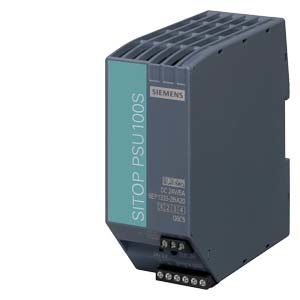
Power Supply220 Products
-
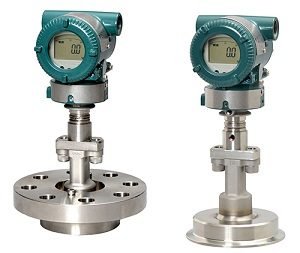
Pressure Transmitter146 Products
-
Programmable Logic Controller (PLC)6,295 Products
-
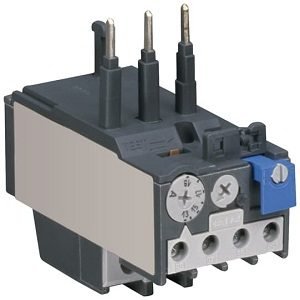
Relay927 Products
-
Sensor2,221 Products
-
Servo Motors & Motor Drives5,037 Products
-
Switch897 Products
-

Timer93 Products
-

Uncategorized1,154 Products
-
Variable Frequency Drives (VFD)255 Products
-
Yokogawa Remote Indicators16 Products
Leave a Reply