
Part 2: Industrial Internet of Things (IIoT) Guide: Complete 2026 Handbook
IIoT Gateways: Bridging Operational Technology and Information Technology
Collecting data from industrial sensors is only the first step. That information must travel securely and efficiently from the production floor to local servers, cloud platforms, or enterprise applications. This is where Industrial IoT gateways become indispensable.
An IIoT gateway acts as an intelligent bridge between Operational Technology (OT)—such as PLCs, sensors, robots, and industrial controllers—and Information Technology (IT) systems, including databases, cloud platforms, analytics software, and enterprise resource planning (ERP) solutions.
Many industrial facilities still operate equipment that was installed 10, 20, or even 30 years ago. These legacy machines often use proprietary or serial communication protocols that cannot connect directly to modern cloud services. IIoT gateways solve this challenge by translating legacy protocols into modern IP-based communications.
For example, an older PLC communicating through Modbus RTU can send data to an IIoT gateway. The gateway converts that information into MQTT or OPC UA messages before transmitting it securely to cloud-based analytics platforms.
Besides protocol conversion, IIoT gateways provide additional capabilities, including:
- Data filtering and aggregation
- Local edge processing
- Secure encryption
- Device authentication
- Firewall functionality
- Network segmentation
- Temporary data storage during network outages
By processing data locally before transmitting it, gateways also reduce bandwidth requirements and improve overall system performance.
Understanding the IIoT Architecture
One of the biggest misconceptions about Industrial IoT is that it is simply “connecting sensors to the internet.” In reality, a successful IIoT deployment consists of several interconnected layers, each responsible for collecting, processing, transporting, analyzing, and presenting industrial data.
Although architectures vary by industry and application, most IIoT systems follow a layered approach.
Device Layer
The device layer forms the physical foundation of an Industrial IoT system.
It includes every device responsible for collecting operational data or interacting with industrial processes.
Typical devices include:
- Smart sensors
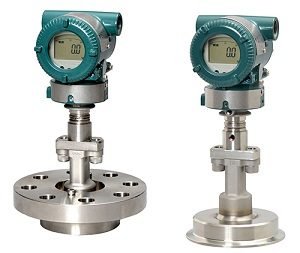
- Pressure transmitters
- Temperature sensors
- Flow meters
- Proximity sensors
- Electric motors
- Servo drives
- Industrial robots
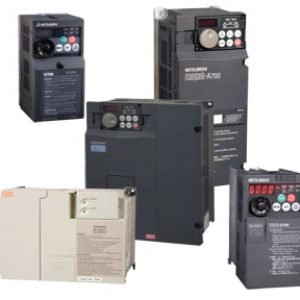
- Variable Frequency Drives (VFDs)
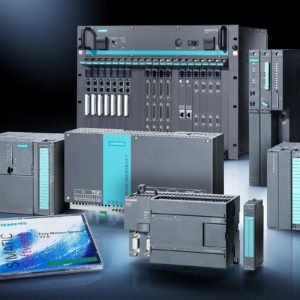
- PLCs
- Remote Terminal Units (RTUs)
Each device generates valuable operational information that can be used to improve production performance.
For example, vibration sensors installed on rotating equipment continuously monitor bearing conditions. Instead of waiting for a bearing to fail unexpectedly, maintenance personnel receive early warnings when vibration levels begin increasing.
Edge Layer
The edge layer performs data processing close to where information is generated.
Rather than transmitting every sensor reading directly to the cloud, edge devices perform several important tasks locally.
These include:
- Filtering unnecessary data
- Detecting abnormal operating conditions
- Compressing information
- Executing machine learning models
- Performing real-time calculations
Edge computing dramatically reduces network traffic while enabling much faster response times.
For example, if a production line detects an unsafe pressure condition, an edge controller can immediately stop the process without waiting for instructions from a cloud server.
This capability is especially important for safety-critical industrial operations.
Communication Layer
Once data has been processed locally, it must be transmitted securely throughout the organization.
The communication layer consists of industrial networking technologies that connect machines, controllers, servers, cloud platforms, and enterprise applications.
Depending on the facility, communication may occur through:
- Industrial Ethernet
- Fiber optic networks
- Wi-Fi 6
- Private 5G
- Cellular networks
- Satellite communications
- Wireless sensor networks
Reliable communication is essential because industrial operations often depend on real-time decision-making. A delayed communication message may result in production losses or equipment damage.
Data Management Layer
Once information reaches centralized servers or cloud infrastructure, it enters the data management layer.
This layer is responsible for:
- Data storage
- Data organization
- Database management
- Historical data archiving
- Backup and recovery
- Data governance
Manufacturers frequently collect millions of sensor readings every day. Without proper data management, valuable operational insights would quickly become difficult to access.
Modern IIoT platforms use scalable databases capable of handling both structured and unstructured industrial data while supporting high-speed analytics.
Application Layer
The application layer transforms industrial data into meaningful information that engineers, operators, and executives can use.
Typical IIoT applications include:
- Production dashboards
- Maintenance management systems
- Energy monitoring software
- Quality management systems
- Predictive analytics
- Asset performance management
- Remote equipment monitoring
Instead of viewing isolated sensor values, users see trends, key performance indicators (KPIs), alarms, and recommended actions presented through intuitive dashboards.
Edge Computing vs. Cloud Computing in IIoT
One of the most common questions organizations ask during an IIoT implementation is whether data should be processed at the edge or in the cloud. The answer is rarely one or the other. Instead, successful IIoT deployments combine both approaches.
What Is Edge Computing?
Edge computing refers to processing industrial data close to the equipment where it is generated. Instead of sending every sensor reading across the internet, edge devices analyze data locally. This approach offers several important advantages.
Faster Decision-Making
Critical industrial decisions often require responses measured in milliseconds.
For example:
- Emergency machine shutdown
- Safety interlock activation
- Motion control
- Robot coordination
These operations cannot depend on internet latency. Edge computing enables immediate responses without relying on cloud connectivity.
Reduced Network Traffic
Modern manufacturing plants may generate terabytes of operational data every day. Transmitting every sensor reading to cloud servers would consume enormous network bandwidth. Edge devices solve this problem by transmitting only meaningful information.
For example, instead of uploading every vibration measurement, an edge gateway may send data only when vibration exceeds acceptable limits.
Improved Reliability
Industrial facilities cannot afford to stop production simply because an internet connection fails.
Edge computing allows production systems to continue operating independently during communication outages.
Once connectivity returns, stored information can be synchronized automatically with cloud servers.
What Is Cloud Computing?
Cloud computing provides centralized computing resources hosted by third-party providers or private enterprise data centers.
Rather than purchasing expensive on-site servers, manufacturers can store data, run analytics, and deploy software through cloud platforms.
Cloud computing supports:
- Long-term data storage
- Artificial intelligence
- Machine learning
- Enterprise dashboards
- Predictive analytics
- Multi-site monitoring
- Global equipment visibility
Organizations operating multiple factories particularly benefit from cloud-based analytics because executives can monitor every facility from a single platform.
Choosing Between Edge and Cloud
Instead of competing technologies, edge and cloud computing complement each other.
A common architecture looks like this:
- Sensors collect data.
- PLCs control machines.
- Edge gateways process information locally.
- Important data is transmitted securely to cloud platforms.
- Artificial intelligence analyzes long-term performance trends.
- Dashboards display actionable insights.
This hybrid architecture delivers both speed and scalability.
Industrial Communication Protocols That Power IIoT
Without reliable communication, Industrial IoT simply cannot function. Industrial communication protocols define how machines exchange information while ensuring reliability, security, and interoperability. Several protocols dominate modern IIoT deployments.
MQTT
Message Queuing Telemetry Transport (MQTT) is one of the most widely adopted messaging protocols for Industrial IoT.
MQTT was specifically designed for environments with limited bandwidth and unreliable network connections.
Its publish-subscribe architecture allows thousands of devices to exchange information efficiently.
Key advantages include:
- Lightweight communication
- Low bandwidth consumption
- Excellent cloud compatibility
- High scalability
- Secure encrypted messaging
MQTT has become the preferred protocol for cloud-connected manufacturing applications.
OPC UA
OPC Unified Architecture (OPC UA) has emerged as the global standard for industrial interoperability.
Unlike older communication protocols, OPC UA supports:
- Secure communication
- Platform independence
- Data modeling
- Object-oriented information exchange
- Cross-vendor compatibility
Because of these capabilities, OPC UA plays a central role in Industry 4.0 initiatives.
It allows equipment from different manufacturers to exchange information without requiring proprietary interfaces.
Modbus TCP
Although Modbus was originally developed decades ago, it remains one of the most widely used industrial communication protocols. Its continued popularity stems from its simplicity and widespread vendor support.
Modbus TCP enables communication between:
- PLCs
- HMIs
- Sensors
- Variable frequency drives
- Industrial gateways
Many IIoT systems continue using Modbus because existing infrastructure already supports it.
EtherNet/IP
EtherNet/IP combines standard Ethernet networking with industrial control protocols.
It supports:
- High-speed industrial communication
- Motion control
- Device diagnostics
- Distributed control systems
Manufacturers using automation platforms from Rockwell Automation commonly deploy EtherNet/IP throughout their production facilities.
PROFINET
PROFINET is another leading Industrial Ethernet protocol, particularly popular in manufacturing facilities using Siemens automation equipment.
Its strengths include:
- Deterministic communication
- Real-time performance
- High-speed data exchange
- Excellent scalability
- Integration with Industry 4.0 architectures
PROFINET is widely used in automotive manufacturing, machine building, and process industries.
Why Protocol Interoperability Matters
Very few factories purchase automation equipment from a single manufacturer. Instead, production environments typically include equipment from multiple vendors installed over many years. An effective IIoT strategy depends on interoperability.
Modern IIoT platforms must communicate seamlessly with:
- PLCs
- SCADA systems
- DCS platforms
- Industrial robots
- Sensors
- MES software
- ERP systems
- Cloud analytics platforms
Open communication standards simplify integration while protecting long-term technology investments.
A layered IIoT architecture combines field devices, edge computing, industrial networks, cloud platforms, and enterprise applications to create a connected and intelligent manufacturing ecosystem.Recommended Related Articles
- Industrial Automation Fundamentals
- Industrial Communication Protocols
- Industrial Instrumentation Control
- Industrial Networking & IIoT
- Industrial Sensors & Measurement
- Motion and Process Control
- PLC Programming & Controllers
- SCADA and DCS Systems
- Servo Motors and Motor Drives
Your One-Stop Source for Reliable Automation & Process Control Equipment
Access trusted process control equipment, expert support, and fast sourcing—all in one place.
-
AC Drives 18,169 Products
-
Circuit Breakers2,227 Products
-
Contactors567 Products
-
Control Valve238 Products
-

Counters78 Products
-

Encoder117 Products
-
Fanuc Main Board1,376 Products
-
Flow Transmitter (Flow meter)552 Products
-
HMI/Touch Screen594 Products
-
Industrial Device Servers125 Products
-
Inverter914 Products
-

Network/Signal2 Products
-

Others4,501 Products
-
Power Supply220 Products
-
Pressure Transmitter146 Products
-
Programmable Logic Controller (PLC)6,295 Products
-
Relay927 Products
-
Sensor2,221 Products
-
Servo Motors & Motor Drives5,037 Products
-
Switch897 Products
-

Timer93 Products
-

Uncategorized1,154 Products
-
Variable Frequency Drives (VFD)255 Products
-
Yokogawa Remote Indicators16 Products
Leave a Reply