Understanding What Is Full Industrial Automation? Smart Factory Technologies in Modern Manufacturing
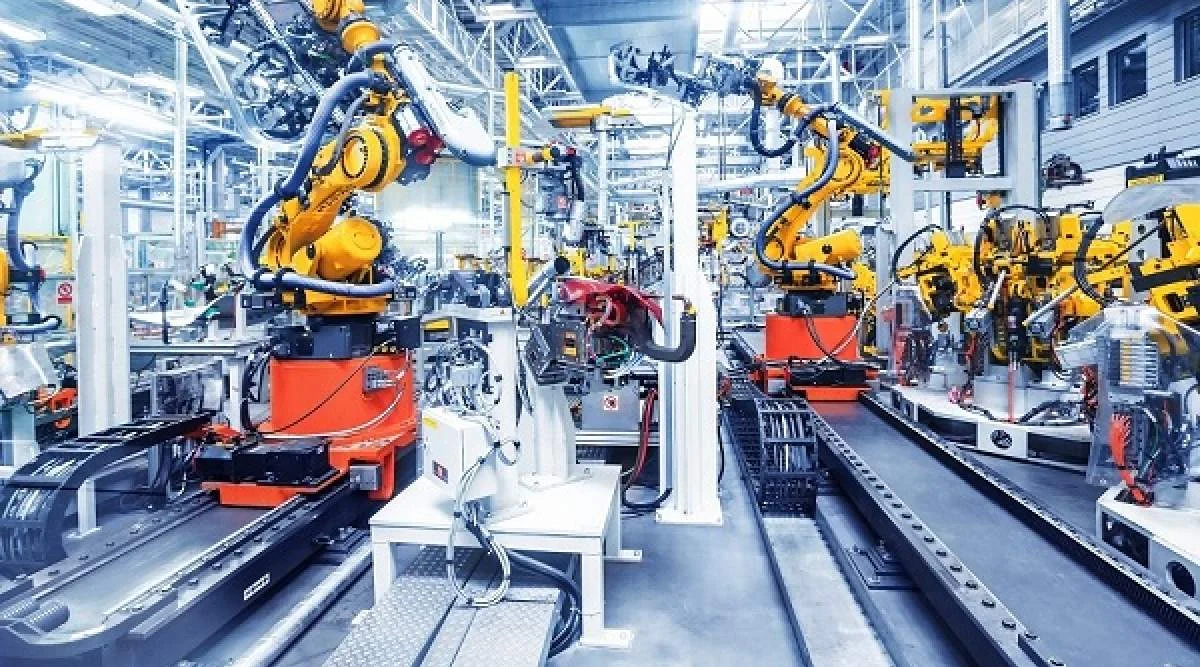
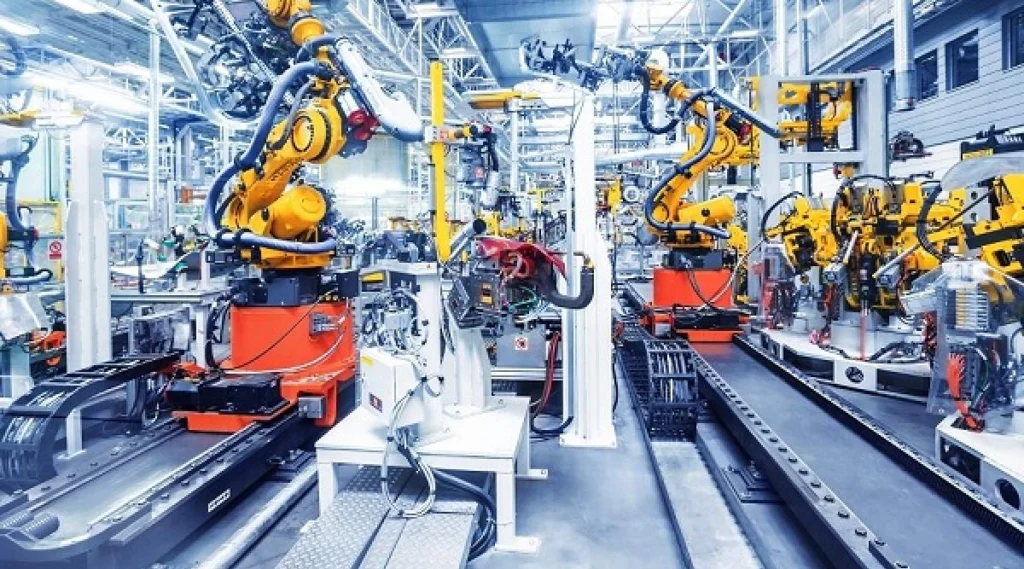
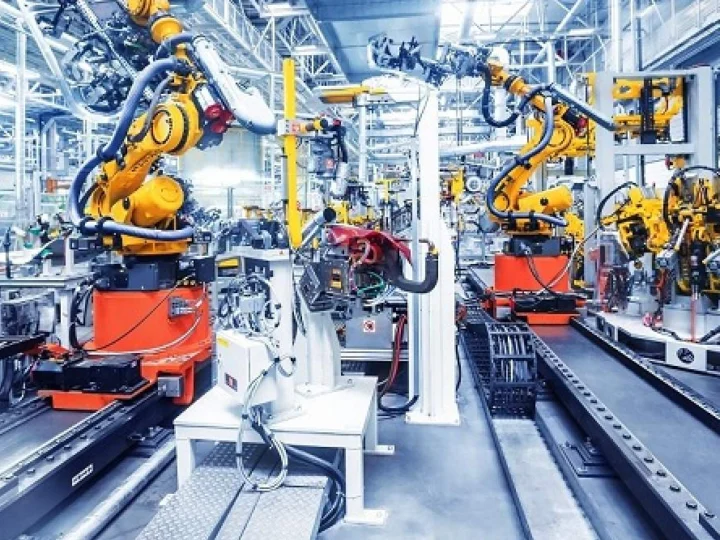
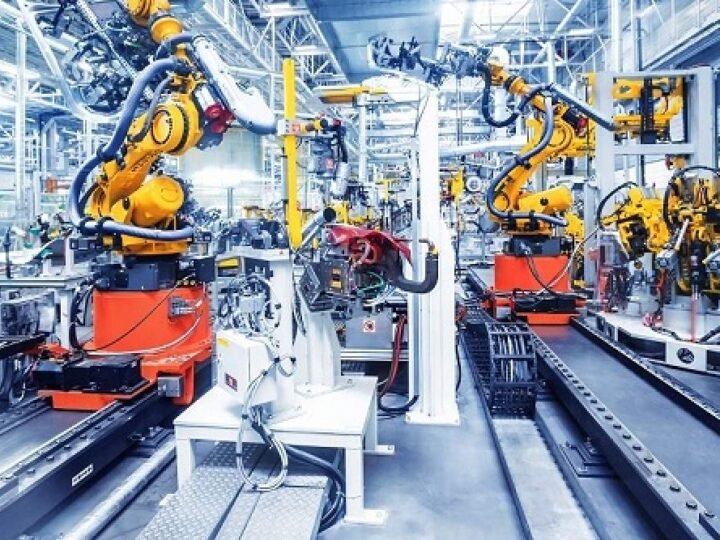
A modern smart factory where industrial robots, intelligent control systems, and connected manufacturing technologies work together to optimize production efficiency, quality, and safety.
 Explore Automation Solutions
Shop Process Control Equipment
Discover how fully automated manufacturing systems integrate PLCs, robotics, AI, IIoT, and smart factory technologies to maximize productivity, quality, and operational efficiency.
Full industrial automation is the highest level of manufacturing automation, where interconnected machines, intelligent control systems, and industrial software perform production processes with minimal human intervention. By integrating technologies such as PLCs, SCADA, industrial robots, machine vision, IIoT, and AI, manufacturers can achieve higher productivity, improved quality, reduced operating costs, and enhanced workplace safety. This guide explains how full industrial automation works, its core technologies, benefits, challenges, and why it is becoming the foundation of smart factories and Industry 4.0.
What Is Full Industrial Automation?
Manufacturing has undergone a remarkable transformation over the past several decades. What once depended heavily on skilled operators manually controlling machines has evolved into highly connected production environments where intelligent systems monitor, analyze, and optimize nearly every aspect of manufacturing. This evolution has led to what many engineers refer to as full industrial automation—a production approach in which machines, control systems, industrial software, and digital communication networks work together with minimal human intervention.
Unlike traditional automation, where operators still perform routine adjustments or oversee individual machines, full industrial automation creates an integrated ecosystem. Every stage of production—from raw material handling and machine control to quality inspection, packaging, and data analysis—is coordinated through interconnected hardware and software platforms. Human operators remain essential for engineering, maintenance, quality assurance, and strategic decision-making, but repetitive operational tasks are largely managed by automated systems.
For manufacturers facing rising labor costs, increasing quality expectations, and global competition, full industrial automation has become a strategic investment rather than simply a productivity upgrade. It enables facilities to increase production capacity, improve consistency, reduce waste, strengthen workplace safety, and make data-driven decisions that continuously improve performance.
Today, industries including automotive manufacturing, semiconductor fabrication, pharmaceuticals, food and beverage processing, chemical production, oil and gas, renewable energy, aerospace, and logistics rely heavily on advanced automation technologies. As Industry 4.0 continues to mature, fully automated factories are becoming more intelligent, more connected, and increasingly capable of optimizing themselves in real time.
Understanding Full Industrial Automation
Full industrial automation represents the highest level of manufacturing automation. Instead of automating only individual machines or isolated production cells, the entire manufacturing process is digitally connected and centrally coordinated.
In a fully automated facility, production equipment communicates continuously through industrial networks. Sensors collect thousands of data points every second, controllers analyze operating conditions, and software platforms coordinate production schedules, quality control, maintenance activities, and inventory management.
A typical fully automated manufacturing system integrates:
Distributed Control Systems (DCS)
Supervisory Control and Data Acquisition (SCADA)
Industrial robots
Machine vision systems
Industrial Internet of Things (IIoT) devices
Manufacturing Execution Systems (MES)
Enterprise Resource Planning (ERP) software
Rather than functioning independently, these technologies exchange information continuously. Production data collected from one machine can influence decisions elsewhere in the factory, creating a coordinated manufacturing environment that is responsive, efficient, and highly reliable.
For example, if a vision inspection system identifies a dimensional variation on a manufactured component, the automation system can immediately notify the PLC, adjust machine parameters, alert maintenance personnel, record the event in the quality management system, and update production reports—all within seconds.
This level of coordination simply isn’t possible in conventional manufacturing environments.
How Full Industrial Automation Differs from Conventional Automation
Many people assume any factory with robots is fully automated. In reality, automation exists on a spectrum.
Basic automation usually controls individual machines. Operators still perform setup, material handling, inspections, and production scheduling.
Partial automation expands automation across several production processes while requiring frequent human intervention.
Full industrial automation integrates every major production function into a unified digital ecosystem.
The key distinction is not the number of robots or automated machines. Instead, it is the degree to which the entire manufacturing operation communicates, coordinates, and optimizes itself.
Characteristics of full industrial automation include:
Continuous machine-to-machine communication
Automated production scheduling
Intelligent process monitoring
Closed-loop quality control
Predictive maintenance
Digital production records
Automatic inventory management
Real-time performance analytics
Rather than simply replacing labor, full automation transforms manufacturing into an intelligent production system capable of making operational adjustments based on live process data.
Why Manufacturers Are Investing in Full Automation
Global manufacturers face increasing pressure to improve efficiency while maintaining exceptional product quality. Customers expect shorter lead times, higher customization, and consistent performance.
At the same time, manufacturers must manage labor shortages, rising energy costs, stricter regulatory requirements, and growing competition. Full industrial automation addresses many of these challenges simultaneously. Instead of relying on manual inspections after production, automated vision systems inspect products during manufacturing. Instead of waiting for equipment failures, predictive maintenance software identifies potential problems before downtime occurs. Instead of manually recording production data, automation systems continuously collect operational information for analysis and reporting.
These capabilities allow manufacturers to make faster decisions while improving productivity and reducing operational costs.
The Core Technologies Behind Full Industrial Automation
A fully automated manufacturing facility depends on multiple technologies working together rather than independently. Each technology contributes specific capabilities that support the overall production process.
Understanding these building blocks helps explain why modern automation systems are significantly more powerful than traditional production equipment.
Programmable Logic Controllers (PLCs)
Programmable Logic Controllers remain the foundation of industrial automation. A PLC is an industrial-grade computer specifically designed to monitor inputs, execute control logic, and operate machinery in real time. Unlike office computers, PLCs are built to withstand vibration, electrical interference, dust, humidity, and extreme temperatures commonly found in industrial environments.
Every automated production line depends on PLCs to perform tasks such as:
Starting and stopping equipment
Monitoring sensors
Controlling motors
Operating valves
Managing conveyor systems
Coordinating robotic cells
Monitoring safety systems
Modern PLCs process thousands of input and output signals every second while communicating with other controllers throughout the manufacturing facility. In many factories, dozens or even hundreds of PLCs operate simultaneously while exchanging information through industrial Ethernet networks.
Related reading:
Human-Machine Interfaces (HMIs)
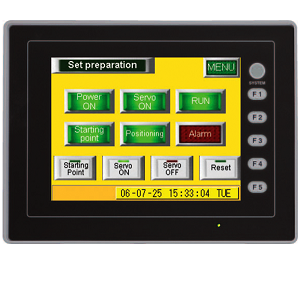
Although automation reduces manual operation, human supervision remains essential. Human-Machine Interfaces provide operators with graphical dashboards that display machine status, production data, alarms, and process trends.
Modern HMIs allow operators to:
Monitor production performance
Start or stop equipment
Change operating parameters
Review alarm histories
Access maintenance information
Analyze production trends
Touchscreen HMIs have become standard throughout manufacturing because they simplify complex industrial processes into intuitive visual interfaces. Instead of checking multiple machines individually, operators can monitor entire production areas from centralized control stations.
Supervisory Control and Data Acquisition (SCADA)
While PLCs control equipment locally, SCADA systems supervise the entire manufacturing operation. SCADA software collects information from multiple PLCs and presents production data through centralized dashboards.
This enables engineers and production managers to monitor:
Production throughput
Equipment status
Process variables
Alarm conditions
Historical trends
Energy consumption
Downtime events
SCADA systems also provide long-term historical databases that help manufacturers identify production bottlenecks, improve efficiency, and support regulatory compliance.
Because SCADA continuously collects operational data, it serves as one of the most valuable decision-making tools in modern manufacturing.
Industrial Robotics
Industrial robots have become one of the most recognizable symbols of manufacturing automation.
Today’s robotic systems are significantly more advanced than earlier generations. Instead of performing only repetitive movements, modern robots integrate sensors, vision systems, force feedback, and artificial intelligence to perform highly precise manufacturing operations.
Robots are commonly used for:
Arc welding
Spot welding
Assembly
Machine tending
Material handling
Packaging
Palletizing
Painting
Dispensing
Precision inspection
Collaborative robots, often called cobots, further extend automation by allowing humans and robots to work safely within the same production area. This combination improves productivity while preserving flexibility for operations that still benefit from human expertise.
Industrial Communication Networks
One of the defining characteristics of full industrial automation is seamless communication between devices. Industrial communication networks connect controllers, robots, sensors, drives, HMIs, and software platforms into a unified manufacturing system.
Common industrial communication protocols include:
EtherNet/IP
PROFINET
Modbus TCP
EtherCAT
PROFIBUS
OPC UA
IO-Link
These protocols enable equipment from different manufacturers to exchange information reliably and in real time. Without industrial networking, a fully automated factory simply cannot function efficiently. Communication is what transforms individual machines into an integrated production ecosystem.
Industrial Internet of Things (IIoT) and Artificial Intelligence
The Industrial Internet of Things (IIoT) has become one of the defining technologies behind full industrial automation. Rather than operating as isolated machines, today’s production equipment communicates continuously through intelligent networks that collect, analyze, and share operational data across an entire facility.
Every connected sensor, PLC, drive, robot, and vision system becomes part of a larger digital ecosystem. This constant flow of information gives manufacturers unprecedented visibility into production performance and equipment health.
Artificial Intelligence (AI) takes this one step further by transforming raw production data into actionable insights. Instead of simply reporting what happened, AI helps manufacturers predict what is likely to happen next and recommends corrective actions before problems occur.
Modern AI applications include:
Predictive maintenance
Process optimization
Automated quality inspection
Energy optimization
Production scheduling
Demand forecasting
Defect detection
Root cause analysis
For example, vibration sensors installed on a production motor continuously transmit operating data to an AI platform. When abnormal vibration patterns begin to appear, the software can predict bearing failure weeks before the machine stops operating. Maintenance teams can then replace the component during scheduled downtime instead of responding to an unexpected production shutdown. This predictive capability significantly reduces maintenance costs while increasing equipment availability.
Machine Vision Systems
Machine vision has become an essential component of fully automated manufacturing. Unlike human inspectors, machine vision systems can inspect thousands of products every hour with exceptional speed and repeatability. High-resolution industrial cameras capture images of products while advanced software analyzes every component against predefined quality standards.
Machine vision systems commonly inspect:
Product dimensions
Surface defects
Assembly verification
Barcode and QR code reading
Label placement
Color consistency
Component orientation
Packaging accuracy
Because inspections occur automatically during production, defective products can be identified and removed before reaching customers. Many manufacturers now integrate machine vision directly with robotic systems. If an inspection camera identifies an improperly positioned component, the robot immediately adjusts its movement without requiring operator intervention. This closed-loop quality control dramatically improves manufacturing consistency.
Motion Control Systems
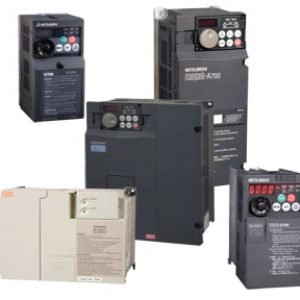
Modern automation relies heavily on precise motion control. Servo motors, variable frequency drives (VFDs), linear actuators, and motion controllers coordinate equipment movement with exceptional accuracy.
Motion control technology is widely used in:
CNC machining
Packaging machinery
Pick-and-place robots
Conveyor systems
Printing equipment
Semiconductor manufacturing
Electronics assembly
High-performance servo systems allow robots and production equipment to synchronize multiple axes of movement within milliseconds. This level of precision enables manufacturers to produce complex products while maintaining extremely tight tolerances.
Benefits of Full Industrial Automation
Organizations invest in full industrial automation because it delivers measurable improvements across nearly every aspect of manufacturing operations. Rather than focusing on a single production improvement, automation creates long-term operational advantages that strengthen competitiveness and profitability.
Higher Productivity
One of the most obvious benefits is increased production capacity. Automated equipment operates continuously with consistent performance, allowing manufacturers to produce more products within the same amount of time. Unlike manual operations, automated systems do not experience fatigue or productivity fluctuations during long production shifts.
Many facilities operate twenty-four hours a day with only limited operator supervision, significantly increasing overall equipment utilization.
Improved Product Quality
Consistency is one of automation’s greatest strengths. Automated systems repeat the same process thousands—or even millions—of times while maintaining identical operating parameters.
This consistency reduces:
Product defects
Assembly errors
Material waste
Customer returns
Warranty claims
Automated inspection systems further improve quality by identifying defects immediately rather than after production has finished. As a result, manufacturers achieve higher first-pass yield and greater customer satisfaction.
Enhanced Workplace Safety
Industrial environments often involve hazardous conditions such as:
High temperatures
Heavy machinery
Hazardous chemicals
High-voltage equipment
Fast-moving production lines
Automation reduces worker exposure to these hazards by assigning dangerous tasks to robotic systems and automated equipment. Employees increasingly focus on programming, maintenance, engineering, and process improvement instead of physically demanding or high-risk operations. This shift contributes to fewer workplace injuries and improved compliance with occupational safety regulations.
Lower Operating Costs
Although automation requires substantial initial investment, long-term operating costs often decrease significantly.
Manufacturers commonly experience savings through:
Reduced labor costs
Lower scrap rates
Improved energy efficiency
Fewer equipment failures
Reduced rework
Better inventory control
Shorter production cycles
These cumulative improvements often produce an attractive return on investment within several years.
Better Production Visibility
Modern automation systems continuously collect operational data throughout the manufacturing process.
Managers can monitor:
Overall Equipment Effectiveness (OEE)
Production throughput
Downtime events
Equipment utilization
Energy consumption
Product quality
Maintenance history
Instead of making decisions based on assumptions, manufacturers rely on real-time operational data to improve production performance.
Applications of Full Industrial Automation
Full industrial automation has expanded well beyond traditional automotive manufacturing. Today, nearly every major industrial sector benefits from advanced automation technologies.
Automotive Manufacturing
Automotive production remains one of the world’s most automated industries. Automation supports:
Robotic welding
Paint systems
Engine assembly
Vehicle inspection
Material handling
Final assembly
Automated guided vehicles (AGVs)
These highly integrated production lines manufacture thousands of vehicles while maintaining exceptional quality standards.
Food and Beverage Processing
Food manufacturers rely on automation to improve hygiene, consistency, and production speed. Automation applications include:
Ingredient handling
Mixing systems
Filling equipment
Packaging
Labeling
Vision inspection
Palletizing
Automation also supports food safety compliance through comprehensive production tracking and electronic records.
Pharmaceutical Manufacturing
Strict regulatory requirements make pharmaceutical manufacturing an ideal candidate for full automation. Automated systems improve:
Batch consistency
Sterile processing
Packaging verification
Electronic documentation
Process validation
Traceability
Every production step can be recorded automatically, supporting regulatory compliance and product quality.
Oil and Gas
Automation plays a vital role throughout upstream, midstream, and downstream operations. Applications include:
Pipeline monitoring
Tank level measurement
Compressor control
Refinery operations
Leak detection
Safety shutdown systems
Real-time monitoring helps operators improve efficiency while protecting personnel and the environment.
Warehousing and Distribution
Modern logistics facilities increasingly depend on automation. Examples include:
Automated storage and retrieval systems (AS/RS)
Conveyor systems
Robotic palletizing
Autonomous mobile robots (AMRs)
Barcode scanning
Inventory management
These technologies enable warehouses to process significantly more orders with greater accuracy.
Challenges of Implementing Full Industrial Automation
Although the benefits are substantial, implementing full industrial automation requires careful planning. Manufacturers should evaluate several important considerations before beginning large automation projects.
High Initial Investment
Automation equipment, industrial software, engineering services, and system integration require significant capital investment. However, organizations should evaluate automation based on long-term operational improvements rather than initial purchase price alone.
Integration Complexity
Modern facilities often contain equipment from multiple manufacturers. Successfully integrating PLCs, robots, SCADA platforms, ERP software, and IIoT systems requires experienced engineering teams and standardized communication protocols.
Workforce Development
Automation does not eliminate the need for skilled workers. Instead, workforce requirements shift toward:
Automation engineers
PLC programmers
Robotics technicians
Instrumentation specialists
Network engineers
Cybersecurity professionals
Continuous employee training remains essential for long-term success.
Cybersecurity
As manufacturing systems become increasingly connected, cybersecurity becomes a critical priority.
Industrial organizations should implement:
Network segmentation
Secure remote access
Multi-factor authentication
Regular software updates
Continuous monitoring
Employee cybersecurity awareness training
Protecting operational technology (OT) infrastructure is now just as important as protecting traditional IT systems.
The Future of Full Industrial Automation
Industrial automation continues to evolve rapidly. Emerging technologies are enabling factories to become increasingly intelligent, connected, and autonomous.
Key trends shaping the future include:
Artificial Intelligence-driven process optimization
Digital twins for virtual production modeling
5G industrial connectivity
Edge computing
Autonomous mobile robots
Collaborative robotics
Sustainable manufacturing technologies
Cloud-based industrial analytics
Rather than replacing human expertise, these technologies will allow engineers to make faster, more informed decisions while improving operational efficiency. The future factory will not simply automate production—it will continuously learn, adapt, and optimize itself.
Continue Learning with Automation Pioneer
To deepen your understanding of industrial automation, critical power infrastructure, and digital transformation, explore these related resources on Automation Pioneer:
- AI Data Center Automation Solution
- Industrial Automation Fundamentals
- Industrial Communication Protocols
- Industrial Instrumentation Control
- Industrial Sensors & Measurement
- Motion and Process Control
- PLC Programming & Controllers
- SCADA and DCS Systems
- Servo Motors and Motor Drives
These articles provide additional technical insight into the automation, networking, monitoring, and control technologies that underpin modern AI data centres and mission-critical industrial infrastructure.
Frequently Asked Questions
1. What is full industrial automation?
Full industrial automation is the complete integration of machines, control systems, industrial software, and communication networks that automatically manage manufacturing processes with minimal human intervention.
2. What is the difference between industrial automation and full industrial automation?
Industrial automation may automate individual machines or processes, while full industrial automation integrates the entire production environment into a connected system that coordinates manufacturing, quality, maintenance, and business operations.
3. Which industries benefit most from full industrial automation?
Industries including automotive, pharmaceuticals, food and beverage, semiconductor manufacturing, oil and gas, renewable energy, warehousing, aerospace, and chemical processing benefit significantly from full automation.
4. What technologies are used in full industrial automation?
Typical technologies include PLCs, SCADA systems, HMIs, industrial robots, servo drives, machine vision, IIoT devices, MES software, ERP systems, AI, and industrial communication networks.
5. Does full industrial automation eliminate human jobs?
No. Automation changes the nature of work rather than eliminating it entirely. Demand continues to grow for automation engineers, robotics specialists, PLC programmers, maintenance technicians, cybersecurity professionals, and data analysts.
6. How much can full industrial automation improve productivity?
Results vary by industry, but many manufacturers report significant improvements in production throughput, equipment utilization, product quality, and overall operational efficiency after implementing comprehensive automation strategies.
7. What are the biggest challenges when implementing full industrial automation?
The most common challenges include high initial investment, integrating legacy equipment, workforce training, cybersecurity risks, and selecting scalable technologies that support future growth.
8. Is full industrial automation suitable for small and medium-sized manufacturers?
Yes. Many small and medium-sized manufacturers implement automation incrementally by automating high-value processes first and expanding over time as business needs and budgets allow.
9. How does full industrial automation support Industry 4.0?
Full industrial automation provides the connected infrastructure required for Industry 4.0 by integrating machines, sensors, software, cloud computing, AI, and real-time analytics into a unified manufacturing ecosystem.
10. What should companies consider before investing in full industrial automation?
Organizations should evaluate production goals, expected return on investment, equipment compatibility, workforce readiness, cybersecurity requirements, scalability, and long-term maintenance support before beginning an automation project.
Full industrial automation is far more than a collection of robots and control systems—it is a strategic approach to creating connected, intelligent manufacturing operations that continuously improve performance. By integrating technologies such as PLCs, SCADA, industrial robotics, machine vision, IIoT, AI, and enterprise software, manufacturers gain greater visibility, higher productivity, improved product quality, and enhanced operational resilience.
As Industry 4.0 technologies continue to mature, organizations that invest in scalable automation solutions will be better positioned to meet evolving customer expectations, address workforce challenges, and compete in an increasingly data-driven global marketplace. Whether you are modernizing an existing production line or designing a new smart factory, full industrial automation provides the technological foundation for long-term manufacturing excellence.
Check Our Comprehensive Automation Brands Get Latest Industrial Automation NewsYour One-Stop Source for Reliable Automation & Process Control Equipment
Access trusted process control equipment, expert support, and fast sourcing—all in one place.
Check Our Comprehensive Industrial Automation Categories-
AC Drives 18,169 Products
-
Circuit Breakers2,227 Products
-
Contactors567 Products
-
Control Valve238 Products
-

Counters78 Products
-

Encoder117 Products
-
Fanuc Main Board1,376 Products
-
Flow Transmitter (Flow meter)552 Products
-
HMI/Touch Screen594 Products
-
Industrial Device Servers125 Products
-
Inverter914 Products
-

Network/Signal2 Products
-

Others4,501 Products
-
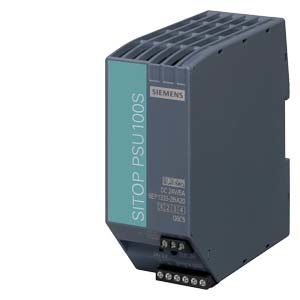
Power Supply220 Products
-
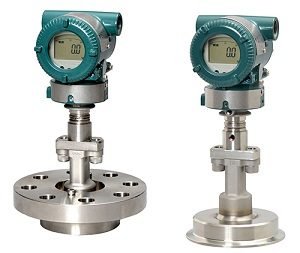
Pressure Transmitter146 Products
-
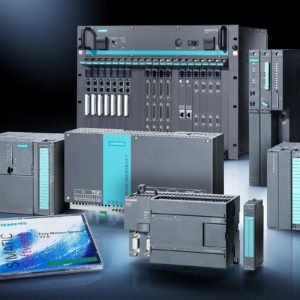
Programmable Logic Controller (PLC)6,295 Products
-
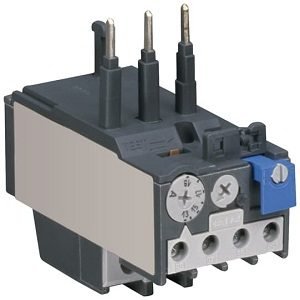
Relay927 Products
-
Sensor2,221 Products
-
Servo Motors & Motor Drives5,037 Products
-
Switch897 Products
-

Timer93 Products
-

Uncategorized1,154 Products
-
Variable Frequency Drives (VFD)255 Products
-
Yokogawa Remote Indicators16 Products
Leave a Reply