
Understanding Difference Between EtherCAT vs Profinet vs EtherNet/IP Protocols: Which Industrial Ethernet Network Is Right for Your Automation System?
Which Industrial Ethernet protocol is the fastest?, Can different Industrial Ethernet protocols operate in the same facility? and How do I choose the right Industrial Ethernet protocol?
 Explore Automation Solutions
Shop Process Control Equipment
The Difference Between EtherCAT vs Profinet vs EtherNet/IP Protocols
Industrial Ethernet has become the backbone of modern automation systems. As manufacturers continue adopting smart factories, Industrial Internet of Things (IIoT), and Industry 4.0 technologies, selecting the right communication protocol is more important than ever.
Among the many industrial communication standards available today, EtherCAT, PROFINET, and EtherNet/IP are the three most widely deployed Industrial Ethernet protocols. They connect programmable logic controllers (PLCs), human-machine interfaces (HMIs), servo drives, robots, sensors, distributed I/O, vision systems, and other industrial devices into a unified control network.
Although these protocols share the same Ethernet physical layer, they differ significantly in architecture, communication methods, synchronization, determinism, performance, scalability, and ideal applications. Choosing the wrong protocol can limit machine performance, increase engineering complexity, or create unnecessary integration challenges.
This comprehensive guide explains the differences between EtherCAT, PROFINET, and EtherNet/IP, compares their strengths and limitations, and helps engineers, OEMs, and system integrators determine which protocol best fits their automation projects.
What Are Industrial Ethernet Protocols?
Industrial Ethernet protocols are specialized communication standards designed to provide reliable, deterministic, and real-time data exchange between automation devices. Unlike traditional office Ethernet networks, industrial networks must guarantee predictable communication even in electrically noisy environments and under demanding production conditions.
Today’s Industrial Ethernet protocols support a broad range of applications, including:
Factory automation
Motion control
Robotics
Process automation
Material handling
Packaging machinery
Automotive manufacturing
Food and beverage processing
Pharmaceutical production
Semiconductor manufacturing
These protocols also enable seamless integration between field devices and higher-level systems such as Manufacturing Execution Systems (MES), Supervisory Control and Data Acquisition (SCADA), and Enterprise Resource Planning (ERP) platforms.
Why Industrial Ethernet Has Replaced Traditional Fieldbus Networks
For decades, fieldbus technologies such as DeviceNet, PROFIBUS DP, and CANopen dominated industrial communication. While these protocols remain in service across many facilities, they struggle to meet the bandwidth, interoperability, and data requirements of today’s connected manufacturing environments.
Industrial Ethernet provides several advantages over legacy fieldbus networks:
Higher communication speeds
Larger network capacity
Better integration with IT infrastructure
Support for Industrial IoT
Remote diagnostics
Improved cybersecurity capabilities
Easier expansion and scalability
As a result, EtherCAT, PROFINET, and EtherNet/IP have become the preferred communication platforms for most new automation projects.
EtherCAT Overview
EtherCAT (Ethernet for Control Automation Technology) was developed by Beckhoff Automation and introduced in 2003. Rather than treating Ethernet frames as independent messages exchanged between devices, EtherCAT processes data “on the fly.” Each slave device reads and inserts data as the Ethernet frame passes through it without fully receiving and retransmitting the frame. This unique architecture dramatically reduces communication latency and enables extremely fast cycle times.
How EtherCAT Works
An EtherCAT master sends a single Ethernet frame through the network. As the frame travels from device to device:
Each slave extracts its assigned input data.
The slave inserts its output data.
The frame immediately continues to the next device.
Because devices do not store and retransmit entire packets, communication delays remain exceptionally low.
Advantages of EtherCAT
EtherCAT is recognized for delivering outstanding performance in demanding machine control applications.
Key advantages include:
Ultra-fast communication cycles
Excellent deterministic performance
Outstanding synchronization accuracy
Efficient bandwidth utilization
Flexible network topologies
Excellent servo motion performance
Very low communication jitter
These characteristics make EtherCAT particularly well suited for synchronized motion control and robotics.
Limitations of EtherCAT
Despite its performance benefits, EtherCAT has some considerations.
Requires EtherCAT-compatible hardware
Smaller installed base than EtherNet/IP in North America
Integration with some legacy systems may require gateways
Typical Applications
EtherCAT is commonly deployed in:
CNC machines
Packaging equipment
Semiconductor manufacturing
Robotics
Printing presses
High-speed assembly systems
Servo motion control
Precision manufacturing
PROFINET Overview
PROFINET was developed by PROFIBUS & PROFINET International (PI) as the Ethernet successor to PROFIBUS. It has become one of the world’s most widely adopted industrial communication standards, especially in Europe.
PROFINET supports three communication classes:
Non-real-time (NRT)
Real-time (RT)
Isochronous Real-Time (IRT)
The availability of IRT makes PROFINET suitable for demanding motion control applications while maintaining excellent compatibility with standard Ethernet networks.
Advantages of PROFINET
PROFINET offers:
High scalability
Strong diagnostics
Excellent integration with Siemens automation platforms
Flexible network architecture
Comprehensive device management
Good real-time performance
Broad vendor ecosystem
Its ability to handle both standard IT traffic and industrial communication on the same infrastructure is one of its greatest strengths.
Limitations
Some advanced real-time capabilities require specialized hardware. Engineering configuration can also become more complex on very large distributed systems.
Typical Applications
PROFINET is frequently used in:
Automotive manufacturing
Process industries
Food processing
Water treatment
Chemical plants
Pharmaceutical production
Building automation
EtherNet/IP Overview
EtherNet/IP (Ethernet Industrial Protocol) was introduced by ODVA and has become the dominant Industrial Ethernet protocol throughout North America.
Unlike EtherCAT, EtherNet/IP uses the Common Industrial Protocol (CIP), allowing consistent communication across DeviceNet, ControlNet, and EtherNet/IP networks.
EtherNet/IP supports:
Explicit messaging
Implicit messaging
Producer-consumer communication
Its flexible architecture makes it one of the easiest Industrial Ethernet protocols to integrate across diverse manufacturing environments.
Advantages
EtherNet/IP provides:
Excellent interoperability
Large installed base
Extensive vendor support
Familiar Ethernet infrastructure
Easy integration with enterprise networks
Strong diagnostics
Excellent Rockwell Automation compatibility
Limitations
Although EtherNet/IP performs well for most manufacturing applications, it generally cannot match EtherCAT’s synchronization performance for demanding multi-axis motion control. Very large real-time motion systems may require careful network design to maintain deterministic performance.
Typical Applications
EtherNet/IP is widely used in:
Automotive assembly
Material handling
Packaging
Food production
Warehouse automation
Pharmaceutical manufacturing
Oil and gas
Consumer goods manufacturing
EtherCAT vs PROFINET vs EtherNet/IP: Feature Comparison
| Feature | EtherCAT | PROFINET | EtherNet/IP |
|---|---|---|---|
| Primary Organization | EtherCAT Technology Group | PROFIBUS & PROFINET International | ODVA |
| Communication Method | On-the-fly processing | RT / IRT Ethernet | CIP over Ethernet |
| Motion Performance | Excellent | Excellent (IRT) | Very Good |
| Determinism | Excellent | Excellent | Very Good |
| Synchronization | Outstanding | Excellent | Good |
| Typical Cycle Time | <100 µs | 250 µs–1 ms | 1–10 ms |
| North American Adoption | Moderate | Growing | Excellent |
| European Adoption | Excellent | Excellent | Good |
| Vendor Ecosystem | Large | Very Large | Very Large |
| Best Application | Robotics & Motion | General Factory Automation | Rockwell-Based Systems |
Which Protocol Is Fastest?
When raw communication speed and synchronization matter most, EtherCAT is generally considered the fastest Industrial Ethernet protocol.
Its unique processing method enables:
Extremely low latency
High synchronization accuracy
Very short communication cycles
Excellent multi-axis coordination
This is why EtherCAT dominates industries requiring synchronized servo systems.
Which Protocol Is Best for Motion Control?
Motion control places extraordinary demands on network performance.
For applications involving:
Servo drives
CNC systems
High-speed robotics
Precision positioning
EtherCAT is typically the preferred choice because of its deterministic communication and distributed clock synchronization.
PROFINET IRT also performs exceptionally well in advanced motion systems, particularly within Siemens ecosystems.
EtherNet/IP remains highly capable for many motion applications, especially when integrated with Rockwell Automation platforms.
Which Protocol Is Best for Process Automation?
Process industries emphasize reliability, diagnostics, and integration over ultra-fast synchronization.
For these environments:
PROFINET performs exceptionally well.
EtherNet/IP offers excellent enterprise integration.
EtherCAT is less common but continues expanding into process industries.
Choosing the Right Industrial Ethernet Protocol
The ideal protocol depends on your existing automation ecosystem, performance requirements, and future expansion plans.
Choose EtherCAT if your application requires:
Ultra-fast communication
Multi-axis servo synchronization
Robotics
High-speed packaging
Precision machinery
Choose PROFINET if you need:
Broad interoperability
Siemens integration
Process automation
Flexible plant-wide networking
Strong diagnostics
Choose EtherNet/IP if your facility relies on:
Rockwell Automation controllers
Allen-Bradley PLCs
Enterprise connectivity
North American OEM equipment
CIP-based devices
No single protocol is universally superior. The best choice aligns with your control architecture, installed equipment, engineering expertise, and long-term automation strategy.
Best Practices for Implementing Industrial Ethernet Networks
Regardless of the protocol selected, following proven engineering practices improves network reliability and long-term maintainability.
Use industrial-grade managed Ethernet switches where appropriate.
Separate control traffic from enterprise traffic using VLANs or dedicated networks.
Select certified industrial Ethernet cables and connectors.
Maintain proper grounding and shielding to reduce electromagnetic interference (EMI).
Monitor network performance continuously using diagnostic tools.
Document IP addressing, device names, and network topology.
Apply cybersecurity measures such as firewalls, role-based access, and regular firmware updates.
A well-designed network not only improves machine performance but also simplifies troubleshooting and future expansion.
- Industrial Automation Fundamentals
- Industrial Communication Protocols
- Industrial Instrumentation Control
- Industrial Sensors & Measurement
- Industrial Networking & IIoT
- Motion and Process Control
- PLC Programming & Controllers
- SCADA and DCS Systems
- Servo Motors and Motor Drives
Frequently Asked Questions
What is the main difference between EtherCAT, PROFINET, and EtherNet/IP?
The biggest difference lies in their communication architecture. EtherCAT uses on-the-fly frame processing for extremely fast deterministic communication, PROFINET supports multiple real-time communication classes including IRT, and EtherNet/IP uses the Common Industrial Protocol (CIP) over standard Ethernet infrastructure.
Which Industrial Ethernet protocol is the fastest?
EtherCAT is generally regarded as the fastest Industrial Ethernet protocol due to its low latency, distributed clock synchronization, and efficient frame processing.
Is PROFINET better than EtherNet/IP?
Neither protocol is universally better. PROFINET often excels in Siemens-based automation environments and European manufacturing, while EtherNet/IP is commonly preferred in Rockwell Automation ecosystems and North American facilities.
Which protocol is best for robotics and servo motion?
EtherCAT is widely considered the leading choice for robotics, synchronized servo drives, CNC machines, and high-speed precision motion because of its deterministic communication and exceptional synchronization capabilities.
Can different Industrial Ethernet protocols operate in the same facility?
Yes. Many manufacturing facilities use multiple protocols simultaneously. Gateways, protocol converters, and higher-level control systems enable interoperability between EtherCAT, PROFINET, EtherNet/IP, Modbus TCP, and other industrial networks.
Is EtherNet/IP the same as standard Ethernet?
No. EtherNet/IP uses standard Ethernet hardware but adds the Common Industrial Protocol (CIP) to support deterministic industrial communication, device configuration, diagnostics, and real-time control.
How do I choose the right Industrial Ethernet protocol?
Consider your existing PLC platform, motion control requirements, vendor ecosystem, network size, future expansion plans, and engineering expertise. Matching the protocol to your application’s technical and operational requirements usually delivers the best long-term results.
Check Our Comprehensive Automation Brands Get Latest Industrial Automation NewsYour One-Stop Source for Reliable Industrial Automation & Process Control Equipment
Access trusted process control equipment, expert support, and fast sourcing—all in one place.
-
AC Drives 18,169 Products
-
Circuit Breakers2,227 Products
-
Contactors567 Products
-
Control Valve238 Products
-

Counters78 Products
-

Encoder117 Products
-
Fanuc Main Board1,376 Products
-
Flow Transmitter (Flow meter)552 Products
-
HMI/Touch Screen594 Products
-
Industrial Device Servers125 Products
-
Inverter914 Products
-

Network/Signal2 Products
-

Others4,501 Products
-
Power Supply220 Products
-
Pressure Transmitter146 Products
-
Programmable Logic Controller (PLC)6,295 Products
-
Relay927 Products
-
Sensor2,221 Products
-
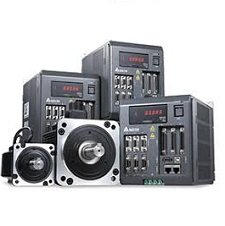
Servo Motors & Motor Drives5,037 Products
-
Switch897 Products
-

Timer93 Products
-

Uncategorized1,154 Products
-
Variable Frequency Drives (VFD)255 Products
-
Yokogawa Remote Indicators16 Products
Leave a Reply