
Understanding PROFINET Protocol and How It Works: A Complete Guide for Industrial Automation & Factory Process Control
What is the difference between PROFINET and PROFIBUS?, What devices can communicate over a PROFINET network? and Is PROFINET an Ethernet protocol?
 Explore Automation Solutions
Shop Process Control Equipment
Understanding PROFINET Protocol and How It Works: A Complete Guide for Industrial Automation
PROFINET has become one of the most widely adopted Industrial Ethernet communication standards in modern manufacturing. Whether you’re designing a new automation system, upgrading an existing production line, or integrating smart factory technologies, understanding how PROFINET works is essential for building reliable, high-performance industrial networks.
Unlike traditional fieldbus systems that were designed primarily for simple device communication, PROFINET delivers high-speed, deterministic Ethernet communication capable of supporting everything from basic sensor connectivity to synchronized motion control and real-time manufacturing data.
Today, thousands of manufacturing facilities around the world rely on PROFINET to connect Programmable Logic Controllers (PLCs), Human-Machine Interfaces (HMIs), variable frequency drives (VFDs), industrial robots, remote I/O systems, safety controllers, and enterprise-level software. Its flexibility, scalability, and compatibility with Industry 4.0 initiatives have made it a preferred networking solution across industries including automotive, food and beverage, pharmaceuticals, water treatment, power generation, and logistics.
This comprehensive guide explains what PROFINET is, how it works, its architecture, communication mechanisms, advantages, applications, troubleshooting techniques, and why it continues to play a central role in modern industrial automation.
What Is PROFINET?
PROFINET (Process Field Network) is an open Industrial Ethernet communication protocol developed to enable fast, reliable, and deterministic communication between industrial automation devices.
Managed by PROFIBUS & PROFINET International (PI), PROFINET was designed as the successor to PROFIBUS while preserving compatibility with existing automation infrastructures. Unlike conventional office Ethernet, PROFINET is engineered specifically for industrial environments where communication must remain predictable, reliable, and capable of operating in harsh conditions.
A PROFINET network enables controllers and field devices to exchange information continuously. Typical connected devices include:
-
PLCs
-
Remote I/O stations
-
HMIs
-
Servo drives
-
Variable frequency drives
-
Industrial robots
-
Vision systems
-
Industrial sensors
-
Safety controllers
Because PROFINET uses standard Ethernet technology, manufacturers can build highly scalable automation systems while leveraging commercially available networking hardware where appropriate.
Why PROFINET Has Become the Industry Standard
Over the past two decades, industrial networking has shifted from proprietary fieldbus systems toward Ethernet-based communication.
Several factors have contributed to PROFINET’s widespread adoption:
-
Higher communication speeds
-
Simplified network architecture
-
Easy integration with enterprise IT systems
-
Improved diagnostics
-
Support for Industrial Internet of Things (IIoT)
-
Excellent scalability
-
Multi-vendor interoperability
Unlike older communication systems that often required dedicated gateways between different protocols, PROFINET enables many industrial devices to communicate over a unified Ethernet infrastructure. This capability simplifies plant design, reduces maintenance complexity, and lowers overall lifecycle costs.
How PROFINET Works
At its core, PROFINET enables real-time communication between automation controllers and field devices using Ethernet technology.
A typical communication cycle follows these steps:
-
Sensors detect process conditions such as pressure, temperature, flow, or position.
-
The information is transmitted over the PROFINET network.
-
The PLC processes incoming data according to the control program.
-
Output commands are sent to actuators, motors, valves, or robots.
-
The cycle repeats continuously—often every few milliseconds.
Because communication occurs rapidly and predictably, automation systems can respond almost instantly to changing production conditions.
Communication Classes
One of PROFINET’s strengths is its ability to support different levels of communication performance.
Standard TCP/IP Communication
This communication method handles non-time-critical tasks such as:
-
Device configuration
-
Diagnostics
-
Web server access
-
File transfers
Although important, these functions do not require deterministic timing.
Real-Time (RT) Communication
Real-Time communication removes unnecessary TCP/IP overhead, allowing process data to be exchanged much faster.
RT communication is commonly used for:
-
Factory automation
-
PLC communication
-
Distributed I/O
-
Variable frequency drives
Most industrial manufacturing systems operate using RT communication.
Isochronous Real-Time (IRT)
For applications requiring extremely precise synchronization, PROFINET supports Isochronous Real-Time communication.
IRT is commonly used for:
-
Servo motion control
-
Robotics
-
Packaging machinery
-
CNC equipment
-
Printing systems
Communication jitter is measured in microseconds, making IRT suitable for highly synchronized machine operations.
PROFINET Network Architecture
A PROFINET network consists of several components working together.
IO Controller
The IO Controller is typically the PLC.
It manages communications with field devices, executes the automation program, and coordinates the overall production process.
IO Devices
IO Devices include equipment such as:
-
Remote I/O modules
-
Motor starters
-
Drives
-
Sensors
-
HMIs
-
Robots
Each device exchanges process data with the controller over the network.
IO Supervisor
The IO Supervisor is usually engineering software used for:
-
Device commissioning
-
Configuration
-
Diagnostics
-
Maintenance
-
Firmware updates
Examples include Siemens TIA Portal and other compatible engineering platforms.
Industrial Ethernet Infrastructure
The physical network typically consists of:
-
Managed industrial switches
-
Industrial Ethernet cables
-
RJ45 or M12 connectors
-
Fiber optic links for long distances
-
Network redundancy components
Modern facilities often implement redundant ring topologies to improve network availability.
PROFINET Topologies
PROFINET supports several network layouts.
Line Topology
Simple and cost-effective.
Often used for conveyor systems and production lines.
Star Topology
Each device connects to a central switch.
Advantages include:
-
Easier troubleshooting
-
Better performance
-
Simplified expansion
Ring Topology
Provides network redundancy. If one cable fails, communication continues through the opposite direction. This greatly improves plant reliability.
Tree Topology
Combines star and line configurations. Suitable for large manufacturing facilities.
Key Features of PROFINET
PROFINET offers a rich feature set that supports modern industrial automation.
High-Speed Communication
Communication speeds up to Gigabit Ethernet are possible depending on the network infrastructure.
Deterministic Performance
Automation systems require predictable response times. PROFINET ensures deterministic communication, allowing machines to operate safely and consistently.
Advanced Diagnostics
Built-in diagnostics allow engineers to identify:
-
Cable faults
-
Device failures
-
Communication errors
-
Network congestion
This significantly reduces troubleshooting time.
Device Interoperability
Manufacturers supporting PROFINET can integrate devices from different vendors into a single automation system. This flexibility protects long-term investments.
Integrated Functional Safety
PROFINET supports PROFIsafe, enabling both standard and safety-related communication on the same network. This simplifies machine safety implementation.
Advantages of PROFINET
Organizations choose PROFINET for several reasons.
Faster Installation
Standard Ethernet infrastructure simplifies wiring and installation.
Reduced Downtime
Advanced diagnostics accelerate fault identification.
Excellent Scalability
New devices can be added with minimal disruption.
Industry 4.0 Ready
PROFINET integrates seamlessly with cloud systems, edge devices, and Industrial IoT platforms.
Long-Term Investment Protection
Its broad vendor support and adherence to international standards ensure long-term compatibility.
Common Industrial Applications
PROFINET is used across virtually every industrial sector.
Automotive Manufacturing
Automotive production lines depend on PROFINET for:
-
Robotic welding
-
Conveyor synchronization
-
Quality inspection
-
Material handling
Food and Beverage
Manufacturers use PROFINET for:
-
Packaging machines
-
Filling systems
-
Batch processing
-
Conveyor control
Pharmaceutical Manufacturing
Precise synchronization supports:
-
Batch production
-
Cleanroom automation
-
Filling systems
-
Traceability
Water and Wastewater Treatment
PROFINET connects:
-
Pumps
-
Valves
-
Flow meters
-
Chemical dosing systems
-
SCADA platforms
Material Handling and Logistics
Distribution centers rely on PROFINET for:
-
Automated storage systems
-
Warehouse conveyors
-
Sortation equipment
-
Autonomous transport systems
PROFINET vs PROFIBUS
Many facilities continue operating PROFIBUS while gradually migrating toward PROFINET.
| Feature | PROFINET | PROFIBUS |
|---|---|---|
| Network Type | Industrial Ethernet | Fieldbus |
| Speed | Up to Gigabit Ethernet | Up to 12 Mbps |
| Real-Time Communication | Yes | Limited |
| Enterprise Integration | Excellent | Limited |
| Industry 4.0 Support | Excellent | Moderate |
| Scalability | High | Moderate |
Although PROFIBUS remains reliable, PROFINET provides significantly greater flexibility and future expansion opportunities.
Best Practices for PROFINET Network Design
Reliable PROFINET performance depends on thoughtful network design.
Recommendations include:
-
Use industrial-grade managed Ethernet switches.
-
Separate automation traffic from business IT traffic where practical.
-
Implement redundant ring topologies for critical systems.
-
Label devices and cables clearly.
-
Monitor network diagnostics regularly.
-
Keep firmware updated.
-
Document IP addressing and device names.
-
Use certified PROFINET cables and connectors.
Following these practices improves reliability and simplifies long-term maintenance.
Troubleshooting Common PROFINET Issues
Most PROFINET communication problems fall into a few common categories.
Device Not Found
Possible causes include:
-
Incorrect device name
-
Duplicate IP address
-
Configuration mismatch
Network Interruptions
Potential causes:
-
Damaged Ethernet cable
-
Loose connector
-
Failed switch
Communication Delays
Often caused by:
-
Network congestion
-
Improper switch configuration
-
Excessive broadcast traffic
Intermittent Faults
Usually related to:
-
Electrical noise
-
Poor grounding
-
Faulty connectors
Using managed switches with diagnostic capabilities helps identify many of these issues before they affect production.
The Future of PROFINET
As manufacturing becomes increasingly connected, PROFINET continues to evolve.
Emerging technologies include:
-
Time-Sensitive Networking (TSN)
-
OPC UA integration
-
Edge computing
-
Artificial intelligence
-
Predictive maintenance
-
Digital twins
-
Industrial cybersecurity enhancements
These advancements position PROFINET as a key enabling technology for next-generation smart factories.
- Industrial Automation Fundamentals
- Industrial Communication Protocols
- Industrial Instrumentation Control
- Industrial Sensors & Measurement
- Motion and Process Control
- PLC Programming & Controllers
- SCADA and DCS Systems
- Servo Motors and Motor Drives
Frequently Asked Questions
What is PROFINET used for?
PROFINET is an Industrial Ethernet communication protocol used to connect PLCs, sensors, drives, robots, HMIs, and other industrial devices for real-time control and monitoring.
What is the difference between PROFINET and PROFIBUS?
PROFINET uses Ethernet technology for high-speed, real-time communication, while PROFIBUS is a serial fieldbus protocol with lower bandwidth and more limited integration capabilities.
Is PROFINET an Ethernet protocol?
Yes. PROFINET is based on Industrial Ethernet and is specifically optimized for deterministic communication in industrial automation environments.
Can PROFINET support motion control applications?
Yes. PROFINET supports Isochronous Real-Time (IRT) communication, making it suitable for servo drives, robotics, CNC machines, and other synchronized motion control applications.
What devices can communicate over a PROFINET network?
A PROFINET network can connect PLCs, remote I/O modules, HMIs, industrial robots, servo drives, variable frequency drives, sensors, vision systems, and safety controllers.
Is PROFINET compatible with Industry 4.0?
Yes. PROFINET is designed to support smart manufacturing initiatives by enabling seamless integration with Industrial IoT platforms, cloud applications, edge computing, and advanced analytics.
How does PROFINET improve industrial reliability?
PROFINET improves reliability through deterministic communication, advanced diagnostics, network redundancy options, integrated safety support, and standardized interoperability between devices from multiple manufacturers.
Discover Our Automation Brands Explore Automation CategoriesYour One-Stop Source for Reliable Industrial Automation & Process Control Equipment
Access trusted process control equipment, expert support, and fast sourcing—all in one place.
Get Latest Industrial Automation News-
AC Drives 18,169 Products
-
Circuit Breakers2,227 Products
-
Contactors567 Products
-
Control Valve238 Products
-

Counters78 Products
-

Encoder117 Products
-
Fanuc Main Board1,376 Products
-
Flow Transmitter (Flow meter)552 Products
-
HMI/Touch Screen594 Products
-
Industrial Device Servers125 Products
-
Inverter914 Products
-

Network/Signal2 Products
-

Others4,501 Products
-
Power Supply220 Products
-
Pressure Transmitter146 Products
-
Programmable Logic Controller (PLC)6,295 Products
-
Relay927 Products
-
Sensor2,221 Products
-
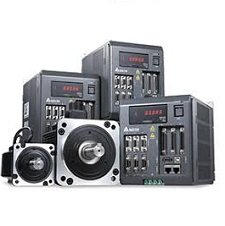
Servo Motors & Motor Drives5,037 Products
-
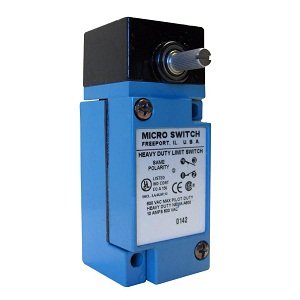
Switch897 Products
-

Timer93 Products
-

Uncategorized1,154 Products
-
Variable Frequency Drives (VFD)255 Products
-
Yokogawa Remote Indicators16 Products
Leave a Reply