Essential AI Data Center Components: PLCs, HMIs, Sensors, Drives & Process Control Equipment
AI data centers are not simply conventional data centers with more servers. They are increasingly high-density industrial environments that must coordinate massive electrical loads, advanced cooling systems, pumps, fans, valves, power equipment, instrumentation, and control networks around the clock.
PLCs, HMIs, industrial sensors, AC drives/VFDs, transmitters, control valves, power-control equipment, and industrial communication systems form an important automation layer for AI data-center infrastructure. These technologies measure physical conditions, execute control logic, regulate cooling and power systems, provide operator visibility, and help keep mission-critical equipment operating within defined limits.
As AI computing density increases, industrial automation and process control are becoming increasingly important to the reliability, scalability, efficiency, and maintainability of AI data-center infrastructure.
Why AI Data Centers Need Industrial Automation
The rapid growth of AI workloads is changing the engineering requirements of data centers. Conventional computing loads can already demand substantial power and cooling, but high-performance AI infrastructure introduces significantly greater power density and thermal-management challenges.
That changes the role of facility automation.
An AI data center can contain thousands of physical devices operating simultaneously, including:
GPU and accelerator servers
Electrical distribution equipment
UPS systems
Generators
Switchgear
Chillers
Pumps
Cooling towers
Heat exchangers
Coolant distribution units
Fans
Control valves
Temperature sensors
Pressure transmitters
Flow meters
PLCs
HMIs
SCADA or supervisory systems
Variable frequency drives
Industrial communication equipment
The critical point is that these components must work together. A cooling system, for example, cannot simply run at maximum capacity indefinitely. It needs measurements from sensors, control decisions from controllers, variable-speed equipment, and feedback from the process itself.
A typical control sequence might look like this:
Sensor → PLC → VFD → Pump → Cooling Loop → Sensor
The sensor measures the process. The PLC evaluates the measurement. The VFD adjusts motor speed. The pump changes coolant flow. The sensor then measures the result.
That is a closed-loop industrial control system operating inside a data-center environment.
The distinction matters because AI data centers increasingly require the same engineering disciplines found in other mission-critical industrial facilities: instrumentation, control logic, redundancy, alarm management, process monitoring, equipment sequencing, and reliable communications.
AI data-center infrastructure combines computing, electrical distribution, cooling, instrumentation, and industrial automation.
AI Data Center Automation Architecture
An AI data center’s automation architecture can be understood as several interconnected layers.
At the field level, sensors, transmitters, meters, valves, motors, and other devices interact directly with physical equipment.
At the control level, PLCs and industrial controllers process inputs and execute control strategies.
At the operator level, HMIs and supervisory systems give engineers and technicians visibility into equipment and process conditions.
At the enterprise and analytics level, operational data can feed data-center infrastructure management, energy-management, maintenance, analytics, and AI-based optimization platforms.
This creates a hierarchy that looks roughly like:
Field Devices → PLCs/Controllers → HMI/SCADA → Data Management & Analytics
Each layer has a different job.
The field devices tell the system what is physically happening. The PLC determines what action should occur. The HMI gives personnel visibility and control. Higher-level systems analyze performance and help optimize the facility.
That separation is important because an AI data center should not depend on a cloud analytics platform simply to perform basic safety-critical control functions.
Local control needs to remain capable of responding to physical conditions even when higher-level systems or external communications become unavailable.
Recent industry developments illustrate this convergence. Data-center cooling control platforms are increasingly integrating PLCs, HMIs, industrial communications, and interfaces to systems such as SCADA, building-management systems, and data-center infrastructure management platforms.
PLCs: The Control Layer for AI Data Center Infrastructure
Programmable logic controllers are among the most important components in the industrial automation architecture supporting AI data-center infrastructure.
A PLC is an industrial controller designed to monitor inputs, execute programmed logic, and control outputs in real time.
Unlike general-purpose computers, PLCs are engineered for deterministic industrial control. They can operate continuously, process digital and analog signals, communicate with industrial devices, and execute control sequences with predictable behavior.
For AI data centers, that makes PLCs particularly useful for controlling mechanical and electrical infrastructure.
What Do PLCs Control in an AI Data Center?
Depending on the facility architecture, PLCs can control or coordinate:
Chilled-water pumps
Cooling pumps
Fans
Cooling towers
Chillers
Control valves
Heat exchangers
Coolant distribution units
Air-handling systems
Generator auxiliaries
Water systems
Environmental equipment
Motor-driven equipment
Consider a chilled-water system.
Temperature and pressure transmitters provide measurements to the PLC. The PLC compares those measurements with programmed operating parameters. It then commands pumps, valves, fans, or other equipment to maintain the required process conditions.
The PLC is therefore not merely collecting data. It is making real-time control decisions based on physical inputs.
Why PLC Selection Matters
Choosing a PLC for AI data-center infrastructure requires more than looking at processor speed.
Engineers should evaluate:
Number and type of I/O points
Analog input and output requirements
Communication protocols
Processing requirements
Redundancy
Diagnostics
Environmental specifications
Cybersecurity capabilities
Lifecycle support
Expansion capability
Availability of replacement components
For large or mission-critical installations, redundancy may also become important.
A redundant control architecture can help prevent a single controller failure from interrupting critical facility operations.
Automation Pioneer maintains a broad range of programmable logic controllers for industrial automation and process-control applications. Explore Automation Pioneer PLCs
HMIs: The Operator Interface for Critical Infrastructure
PLCs control processes, but operators need a practical way to see what the system is doing.
That is the job of the Human-Machine Interface (HMI).
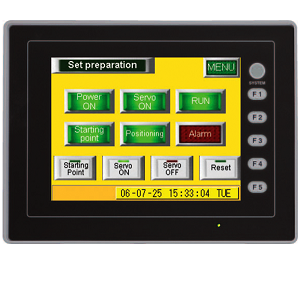
An HMI provides a graphical interface through which operators can monitor equipment, view alarms, inspect process variables, acknowledge conditions, and make authorized adjustments.
In an AI data center, an HMI might display:
Supply-water temperature
Return-water temperature
Pump speed
Flow rate
System pressure
Valve position
Chiller status
Fan speed
Electrical measurements
Equipment alarms
Equipment runtime
Communication status
The quality of an HMI depends heavily on how information is presented. An operator should be able to identify an abnormal condition quickly rather than searching through hundreds of unrelated data points.
HMI Versus SCADA
HMI and SCADA are related, but they perform different functions.
An HMI generally provides the operator interface for a machine, equipment package, or local process.
SCADA—Supervisory Control and Data Acquisition—operates at a broader supervisory level. It can collect data from multiple PLCs and systems, provide centralized visualization, manage alarms, and support historical data analysis.
For example, a cooling skid might have a local HMI while the facility’s supervisory platform aggregates information from dozens of cooling systems.
This layered architecture becomes increasingly important as AI data centers scale. Explore HMI Touch Screens from Automation Pioneer
HMI and supervisory monitoring provide operators with real-time visibility into cooling, power, alarms, and equipment status.
Sensors and Instrumentation: The Measurement Layer
Automation cannot control what it cannot measure. That makes industrial sensors and process instrumentation fundamental to AI data-center automation.
A control system may need to know the temperature of a coolant loop, the pressure across a filter, the flow rate through a cooling circuit, or the electrical load of a motor. Without reliable measurement, the controller is effectively operating blind.
Common measurements in AI data-center infrastructure include:
Temperature
Pressure
Differential pressure
Flow
Humidity
Liquid level
Vibration
Current
Voltage
Power
Energy consumption
Temperature Sensors
Temperature measurement is critical to thermal management.
Sensors may monitor:
Server-room temperatures
Supply-air temperature
Return-air temperature
Chilled-water temperature
Coolant temperature
Heat-exchanger temperatures
Equipment temperatures
The value of the sensor increases when its signal becomes part of a control loop. For example, a temperature sensor may detect increasing coolant temperature. The PLC can then increase pump speed, open a valve, activate additional cooling capacity, or initiate an alarm depending on the control strategy.
Pressure Transmitters
Pressure transmitters convert measured pressure into a signal that can be interpreted by automation systems.
They can be used to monitor:
Chilled-water pressure
Coolant-loop pressure
Pump discharge pressure
Differential pressure
Filter pressure drop
Heat-exchanger performance
Pressure trends can also provide useful information for maintenance. A gradual increase in differential pressure across a filter, for example, may indicate increasing restriction.
Flow Measurement
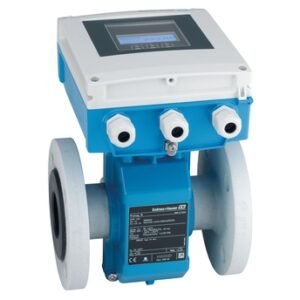
Flow measurement becomes particularly important in liquid-cooled AI infrastructure. A pump can be running while actual coolant flow is inadequate. Without flow measurement, that problem may remain hidden until thermal performance deteriorates.
Flow measurement can therefore help verify:
Pump performance
Cooling capacity
Valve operation
Heat-exchanger performance
Minimum flow conditions
Cooling-loop stability
This is why flow meters and flow transmitters should be considered part of the control architecture rather than optional monitoring devices.
AC Drives and VFDs: Controlling Pumps and Fans
AI data centers contain a large number of motor-driven systems. Pumps circulate cooling fluids. Fans move air. Compressors support refrigeration systems. Other motors operate mechanical equipment throughout the facility.
Running these motors at full speed all the time is often unnecessary.
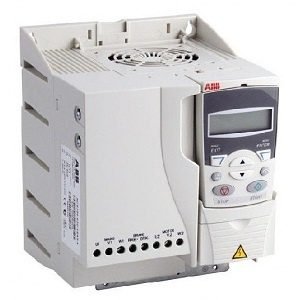
Variable frequency drives (VFDs), also known as AC drives or adjustable-frequency drives, allow engineers to control motor speed according to actual process demand.
That capability is particularly valuable for cooling systems.
Why VFDs Matter in AI Data Center Cooling
Cooling demand changes as computing loads change. When thermal demand decreases, a pump or fan may not need to operate at full speed. A VFD can reduce motor speed to match the process requirement.
This can provide:
Better process control
Improved energy efficiency
Reduced mechanical stress
Lower starting current
More precise flow control
Improved equipment coordination
The benefit becomes significant when equipment operates continuously and at large scale.
VFDs in Closed-Loop Control
The real power of a VFD appears when it becomes part of a feedback loop.
For example:
Pressure Transmitter → PLC → VFD → Pump → Cooling Loop
The pressure transmitter measures the process.
The PLC compares the measured pressure with the desired setpoint.
If pressure is too low, the PLC can command the VFD to increase pump speed.
If pressure is too high, the PLC can reduce pump speed.
The system continuously repeats the cycle.
This is classic industrial process control applied to AI data-center cooling. Explore Automation Pioneer AC Drives
VFD-controlled pumps provide variable-speed control for cooling infrastructure and can respond to changing thermal demand.
Process Control Equipment: Regulating the Physical Environment
PLCs, HMIs, sensors, and drives form the core automation architecture, but they still need physical control devices to influence the process. This is where process-control equipment becomes important.
Typical equipment includes:
Control valves
Valve actuators
Pressure transmitters
Flow meters
Temperature transmitters
Level sensors
Relays
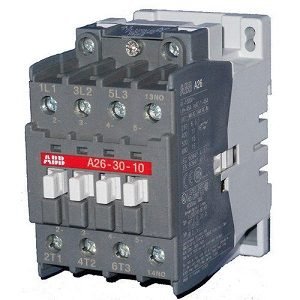
Contactors
Motor starters
Power supplies
Signal-conditioning equipment
These devices form the interface between digital control logic and physical infrastructure.
Control Valves
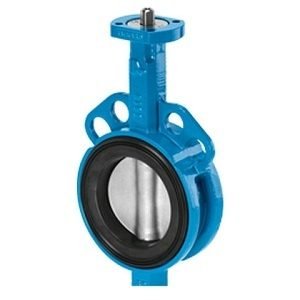
Control valves regulate fluid flow through cooling systems. A PLC can calculate the required valve position based on temperature, pressure, or flow measurements. The valve actuator then physically changes the valve position.
This makes the valve the final control element in many process-control loops.
Power-Control Equipment
AI data centers also depend heavily on electrical control and protection equipment.
Depending on the system architecture, this may include:
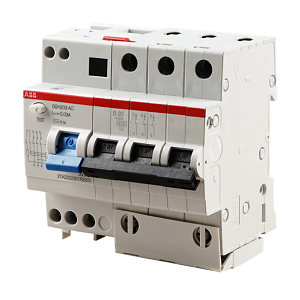
Circuit breakers
Contactors
Relays
Motor starters
Power supplies
Switchgear
Power-monitoring equipment
These components support reliable distribution and control of electrical power to critical infrastructure.
Industrial Communication Networks
An AI data center may contain thousands of intelligent devices. Those devices need to communicate.
Industrial communication networks connect sensors, PLCs, HMIs, drives, meters, supervisory platforms, and other equipment.
Common technologies include:
Modbus RTU
Modbus TCP
EtherNet/IP
PROFINET
PROFIBUS
OPC UA
Industrial Ethernet
The right protocol depends on the equipment, application, network architecture, performance requirements, and integration strategy.
Why Network Architecture Matters
A sophisticated automation system is only as reliable as its communications infrastructure.
Network design should therefore address:
Redundancy
Segmentation
Diagnostics
Device addressing
Time synchronization
Cybersecurity
Failover
Bandwidth
Deterministic communications where required
A critical control system should also be designed so that loss of a supervisory network does not automatically cause loss of essential local control. That principle is particularly important in AI data centers.
Liquid Cooling and Process Control
Liquid cooling is becoming increasingly important as AI computing density increases.
The reason is simple: more computing power concentrated in a smaller physical area creates greater thermal-management requirements.
Recent industry developments are explicitly connecting AI data-center expansion with liquid cooling and industrial PLC control. Mitsubishi Electric, for example, describes industrial PLCs as a control foundation for high-density liquid-cooling systems, while current data-center control platforms increasingly integrate PLCs with cooling equipment and supervisory systems.
A liquid-cooling system may include:
Coolant distribution units
Pumps
Heat exchangers
Temperature sensors
Pressure transmitters
Flow meters
Control valves
VFDs
PLCs
HMIs
Supervisory software
A typical control sequence might work like this:
Temperature sensors measure coolant temperature.
Pressure transmitters measure loop pressure.
Flow meters verify circulation.
The PLC processes the measurements.
The PLC commands VFD-controlled pumps.
Control valves regulate coolant distribution.
The HMI displays system status.
Alarms identify abnormal conditions.
The resulting system is a continuously monitored closed-loop process.
Liquid-cooling infrastructure relies on pumps, heat exchangers, valves, sensors, flow measurement, and control systems working together.
Redundancy and Reliability in AI Data Center Automation
AI data centers operate under stringent availability requirements. That means automation architecture must account for failures.
Depending on the facility’s design, critical systems may use:
Redundant PLCs
Redundant power supplies
Redundant sensors
Redundant communication paths
Standby pumps
Multiple cooling circuits
Backup generators
Redundant control networks
However, redundancy is not simply a matter of installing two of everything. Engineers need to identify single points of failure and determine exactly how the system should respond when a component fails.
Consider a temperature sensor failure. If the controller interprets a failed sensor as a legitimate temperature reading, it could make an incorrect control decision.
A properly engineered system can instead detect signal failure, generate an alarm, switch to an alternative measurement where appropriate, or place the process into a predefined safe operating state.
That requires:
Signal validation
Diagnostics
Alarm management
Failover logic
Appropriate control-system design
Predictive Maintenance and AI Data Center Automation
Once instrumentation and automation systems generate reliable operational data, that information can support predictive maintenance.
Sensors can provide data about:
Temperature
Vibration
Pressure
Flow
Motor current
Energy consumption
Runtime
Equipment cycles
Historical data can then be analyzed for abnormal trends. For example, increasing pump vibration combined with declining flow and changing motor current could indicate a developing mechanical problem.
Similarly, a gradual increase in filter differential pressure could indicate increasing restriction. AI can potentially help identify these relationships at a scale that would be difficult for human operators to evaluate manually.
Google has demonstrated the broader principle of using AI with data-center cooling systems: its DeepMind work used data from thousands of sensors to predict the effect of cooling-control actions while maintaining safety constraints, with local control systems verifying and implementing the resulting actions. (blog.google)
The important engineering lesson is straightforward:
AI optimization depends on reliable physical data.
If the temperature, pressure, flow, or electrical measurements are inaccurate, the resulting optimization will be unreliable.
Cybersecurity in AI Data Center Automation
Connecting industrial automation systems to larger digital networks introduces cybersecurity considerations.
PLCs, HMIs, drives, gateways, and supervisory systems should not simply be treated as ordinary IT endpoints.
A robust architecture should consider:
Network segmentation
Authentication
Access control
Secure remote access
Firmware management
Configuration backups
Logging
Monitoring
Asset inventories
Incident response
Critical control functions should also be separated appropriately from systems that require external or enterprise connectivity.
The objective is not to prevent every system from communicating. The objective is to control who and what can communicate with critical automation assets.
How to Select Automation Components for an AI Data Center
Selecting the right components begins with the process, not the product catalog.
Define What Must Be Controlled
Determine whether the application involves:
Chilled-water systems
Liquid cooling
Pumping systems
HVAC
Cooling towers
Generator auxiliaries
Electrical distribution
Environmental monitoring
The application determines the control architecture.
Define Measurement Requirements
Identify which variables require continuous measurement. Temperature, pressure, flow, level, vibration, electrical current, voltage, and energy may each require different instrumentation.
Select the Controller
The PLC should provide adequate:
I/O capacity
Processing capability
Communications
Diagnostics
Redundancy
Expansion capability
Select Drives for the Actual Load
VFD selection should account for:
Motor rating
Load profile
Required speed range
Environmental conditions
Control method
Communication requirements
Harmonic considerations
Design the HMI Around the Operator
An HMI should show the information operators need to make decisions—not every available data point. Critical alarms, trends, equipment status, and abnormal conditions should be immediately understandable.
Plan for Lifecycle Support
Finally, consider:
Product availability
Replacement parts
Technical support
Firmware
Documentation
Product lifecycle
Cross-reference options
For mission-critical infrastructure, the ability to replace an automation component quickly can be just as important as its initial technical specification.
The Future of AI Data Center Automation
AI data-center infrastructure is moving toward higher power density, increasingly sophisticated liquid cooling, greater automation, and deeper integration between physical infrastructure and digital analytics. That creates several important opportunities.
Future automation architectures will increasingly incorporate:
Advanced liquid cooling
Intelligent pump control
Automated energy optimization
Predictive maintenance
Digital twins
Edge computing
Industrial AI
Advanced process analytics
Automated fault detection
More sophisticated industrial networking
However, the fundamental engineering principles will not change.
A facility still needs accurate sensors.
Controllers still need deterministic control logic.
Pumps and fans still need reliable drives.
Valves still need precise actuation.
Operators still need clear interfaces.
And critical systems still need properly engineered redundancy.
The future of AI data-center automation is therefore not about replacing industrial control with AI. It is about combining reliable industrial control with higher-level intelligence and analytics.
Frequently Asked Questions About AI Data Center Components
What are the essential components of an AI data center automation system?
The essential automation components include PLCs, HMIs, industrial sensors, process transmitters, AC drives or VFDs, control valves, actuators, industrial communication networks, power-control equipment, and supervisory control systems.
Why are PLCs important in AI data centers?
PLCs provide real-time control of physical infrastructure such as pumps, fans, valves, chillers, and cooling systems. They process sensor inputs and execute programmed control logic without depending on higher-level analytics systems.
What sensors are used in AI data centers?
Common instrumentation includes temperature sensors, pressure transmitters, differential-pressure transmitters, flow meters, humidity sensors, vibration sensors, level sensors, and electrical measurement devices.
How are VFDs used in AI data-center cooling?
VFDs regulate the speed of motors driving pumps and fans. They allow cooling equipment to respond to actual process demand rather than operating continuously at full speed.
What is the difference between a PLC and an HMI?
A PLC executes control logic and interacts directly with field equipment. An HMI provides the operator interface used to monitor the process, view alarms, and make authorized adjustments.
What is the role of SCADA in an AI data center?
SCADA provides supervisory monitoring and data acquisition across multiple systems. It can aggregate information from PLCs and other controllers, display operational conditions, manage alarms, and support historical analysis.
Why is flow measurement important for AI data-center cooling?
Flow measurement verifies that coolant is moving through the system at the required rate. Low or unstable flow can indicate pump problems, valve restrictions, blocked filters, or other cooling-system issues.
What process-control equipment is used in AI data centers?
Process-control equipment can include transmitters, flow meters, temperature sensors, control valves, actuators, PLCs, VFDs, relays, contactors, power supplies, and industrial communication equipment.
How does industrial automation improve AI data-center reliability?
Automation continuously monitors physical conditions and can respond to abnormal states faster than manual intervention. Properly engineered control systems also support redundancy, diagnostics, alarms, sequencing, and failover strategies.
How will AI change data-center automation?
AI can analyze operational data to identify anomalies, optimize cooling and energy use, predict equipment failures, and recommend or, under appropriate safeguards, initiate control actions. However, AI should complement rather than replace deterministic local control for critical physical processes.
AI data centers require a sophisticated physical infrastructure behind their computing hardware. PLCs execute control logic, HMIs provide operator visibility, sensors and transmitters measure critical conditions, VFDs regulate motors, and process-control equipment manages the physical flow of power, air, and cooling fluids.
The most effective architecture treats these technologies as an integrated control ecosystem. As AI workloads continue pushing power density and thermal requirements higher, the importance of reliable instrumentation, deterministic control, intelligent motor control, industrial networking, redundancy, and process automation will only increase.
For organizations sourcing the industrial hardware behind these systems, Automation Pioneer provides access to PLCs, HMIs, AC drives, sensors, instrumentation, and other industrial automation and process-control equipment needed to build and maintain modern automated infrastructure.
Explore Automation Pioneer Industrial Automation & Process Control Categories
Recommended Automation Pioneer Resources
To deepen your understanding of industrial automation, critical power infrastructure, and digital transformation, explore these related resources on Automation Pioneer:
- AI Data Centers
- AI Data Center Automation
- AI Data Centre Battery
- AI Data Center Cooling
- AI Data Center Power Distribution
- AI Data Center Sensors
- AI Data Center PLC
- AI Data Center Predictive Maintenance
- AI Data Center Energy Efficiency
- AI Data Centers Environmental Implications
- AI Data Center Safety Systems
- AI Data Center Components
These articles provide additional technical insight into the automation, networking, monitoring, and control technologies that underpin modern AI data centres and mission-critical industrial infrastructure.
Check Our Comprehensive Automation Brands Get Latest Industrial Automation NewsYour One-Stop Source for Reliable Automation & Process Control Equipment
Access trusted process control equipment, expert support, and fast sourcing—all in one place.
Check Our Comprehensive Industrial Automation Categories-
AC Drives 18,169 Products
-
Circuit Breakers2,227 Products
-
Contactors567 Products
-
Control Valve238 Products
-

Counters78 Products
-

Encoder117 Products
-
Fanuc Main Board1,376 Products
-
Flow Transmitter (Flow meter)552 Products
-
HMI/Touch Screen594 Products
-
Industrial Device Servers125 Products
-
Inverter914 Products
-

Network/Signal2 Products
-

Others4,501 Products
-
Power Supply220 Products
-
Pressure Transmitter146 Products
-
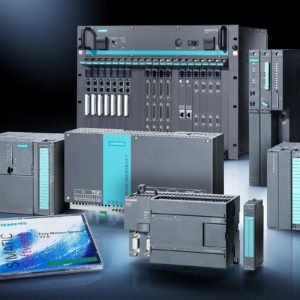
Programmable Logic Controller (PLC)6,295 Products
-
Relay927 Products
-
Sensor2,221 Products
-
Servo Motors & Motor Drives5,037 Products
-
Switch897 Products
-

Timer93 Products
-

Uncategorized1,154 Products
-
Variable Frequency Drives (VFD)255 Products
-
Yokogawa Remote Indicators16 Products
Leave a Reply