
Best Communication Protocols for IIoT Systems: A Complete Guide for Smart Industrial Connectivity
Industrial facilities are generating more operational data today than at any other time in history. Sensors monitor machine health, programmable logic controllers (PLCs) execute control logic in real time, robots coordinate production tasks, and cloud platforms analyze performance data to improve efficiency. None of these technologies, however, can deliver their full value without reliable communication.
That is where Industrial Internet of Things (IIoT) communication protocols become essential.
Communication protocols establish the rules that allow industrial devices, software platforms, and enterprise systems to exchange information accurately and securely. Choosing the right protocol affects everything from system reliability and scalability to cybersecurity, latency, interoperability, and long-term operating costs.
Whether you’re modernizing a legacy manufacturing plant, designing a new automation system, or implementing an Industry 4.0 strategy, understanding the strengths and limitations of today’s leading communication protocols is critical.
In this comprehensive guide, we’ll examine the best communication protocols for IIoT systems, explain how they work, compare their advantages, and help you determine which protocol best suits your industrial application.
What Are IIoT Communication Protocols?
Industrial Internet of Things (IIoT) communication protocols are standardized methods that enable industrial devices to exchange data across machines, controllers, gateways, cloud platforms, and enterprise software.
Unlike traditional industrial communication networks that primarily focused on machine control within a factory, IIoT protocols support secure, scalable communication across multiple layers of an organization—from field devices to cloud analytics platforms.
A modern IIoT network typically connects:
Sensors
Programmable Logic Controllers (PLCs)
Human-Machine Interfaces (HMIs)
SCADA systems
Edge gateways
Industrial computers
Manufacturing Execution Systems (MES)
Enterprise Resource Planning (ERP) software
Cloud platforms
These devices continuously exchange operational information that enables predictive maintenance, real-time monitoring, energy optimization, quality control, and production analytics.
Without standardized communication protocols, each device would require proprietary interfaces, making integration expensive and difficult.
Why Communication Protocols Matter in IIoT
Communication protocols are much more than data transport mechanisms. They directly influence system performance, reliability, and long-term maintainability.
An effective protocol should provide:
Reliable data transmission
Low communication latency
High cybersecurity
Vendor interoperability
Scalability for future expansion
Efficient bandwidth utilization
Easy integration with legacy equipment
As factories continue their digital transformation journey, communication infrastructure has become just as important as PLCs, robotics, and industrial software.
Key Factors When Choosing an IIoT Protocol
Selecting the right communication protocol depends on your operational requirements rather than choosing the newest technology. Consider the following factors before making a decision.
Real-Time Performance
Motion control, robotics, and safety systems require deterministic communication with predictable response times. Applications involving monitoring and analytics generally tolerate higher latency.
Cybersecurity
Industrial networks increasingly face cyber threats.
Protocols should support:
Authentication
Encryption
Role-based access control
Certificate management
Secure remote access
Security should never be treated as an optional feature.
Scalability
A protocol should support thousands of connected devices without significant performance degradation. Scalability becomes increasingly important as manufacturers expand their IIoT initiatives.
Interoperability
Factories often contain equipment from multiple vendors. Choosing widely adopted open protocols simplifies integration while reducing vendor lock-in.
MQTT: The Leading Protocol for Cloud-Based IIoT
MQTT (Message Queuing Telemetry Transport) has become one of the most widely adopted communication protocols for Industrial IoT. Originally designed for satellite communications, MQTT has evolved into the preferred messaging protocol for cloud-connected industrial applications because it is lightweight, efficient, and highly scalable.
How MQTT Works
Unlike traditional client-server communication, MQTT uses a publish-subscribe architecture. Instead of devices communicating directly with one another, they exchange information through a central broker.
The process is straightforward:
Sensors publish data.
The MQTT broker receives the information.
Authorized subscribers receive the updates instantly.
This architecture minimizes network traffic while simplifying communication between thousands of devices.
Advantages
Extremely lightweight
Low bandwidth consumption
Ideal for remote sites
Excellent cloud integration
Highly scalable
Reliable message delivery
Supports intermittent network connections
Limitations
MQTT is not designed for deterministic machine control. It performs exceptionally well for monitoring and analytics but should not replace real-time industrial control networks.
Typical Applications
MQTT is widely used for:
Predictive maintenance
Remote asset monitoring
Smart energy management
Environmental monitoring
Industrial dashboards
Cloud analytics
OPC UA: The Standard for Secure Industrial Interoperability
Open Platform Communications Unified Architecture (OPC UA) has become the preferred industrial interoperability standard. Unlike older industrial protocols, OPC UA focuses not only on communication but also on structured information modeling.
Why OPC UA Matters
Modern factories contain equipment from many manufacturers. OPC UA provides a common language that enables different devices to exchange meaningful information without proprietary drivers.
It supports:
Rich data models
Secure authentication
Encryption
Certificates
Historical data
Alarms
Events
Advantages
Vendor independent
Excellent interoperability
Strong cybersecurity
Platform independent
Supports edge and cloud systems
Rich semantic data
Best Applications
OPC UA is ideal for:
Factory integration
SCADA communication
MES integration
ERP connectivity
Digital twins
Smart manufacturing
Modbus: The Industry Workhorse
Despite being introduced decades ago, Modbus remains one of the most widely deployed industrial communication protocols. Its popularity stems from simplicity.
Most industrial devices support either:
Modbus RTU
Modbus ASCII
Modbus TCP
Why Engineers Still Use Modbus
Modbus is:
Easy to implement
Widely supported
Low cost
Reliable
Well documented
Thousands of industrial devices—including flow meters, pressure transmitters, variable frequency drives, and PLCs—continue to rely on Modbus communication.
Limitations
Modbus lacks built-in security. Consequently, it should not be directly exposed to enterprise or internet-connected networks without appropriate security controls.
EtherNet/IP
EtherNet/IP combines standard Ethernet with industrial control capabilities. It is especially popular in North American manufacturing facilities.
Benefits
High-speed communication
Excellent PLC integration
Supports real-time I/O
Scalable
Standard Ethernet infrastructure
Typical applications include:
Packaging systems
Automotive production
Material handling
Robotics
PROFINET
PROFINET has become one of Europe’s leading industrial Ethernet standards. Designed for deterministic industrial communication, it supports demanding automation applications.
Strengths
Real-time communication
High-speed networking
Excellent diagnostics
Large ecosystem
Industrial redundancy
Industries commonly using PROFINET include:
Automotive
Pharmaceutical
Food processing
Manufacturing
EtherCAT
EtherCAT is widely recognized for extremely fast deterministic communication. Unlike conventional Ethernet protocols, EtherCAT processes data “on the fly” as frames pass through devices.
Advantages
Microsecond synchronization
Exceptional motion control
High-speed robotics
Precise servo control
Minimal latency
Applications include:
CNC machinery
Robotics
Semiconductor equipment
High-speed manufacturing
LoRaWAN for Remote Industrial Monitoring
Not every industrial asset is located inside a factory. Utilities, mining operations, agriculture, and oil pipelines often require long-distance wireless communication.
LoRaWAN provides:
Long communication range
Low power consumption
Battery-powered sensors
Cost-effective deployment
Typical applications include:
Water management
Smart agriculture
Tank monitoring
Environmental monitoring
5G and Private Industrial Wireless Networks
Private 5G networks are rapidly becoming an important component of smart manufacturing.
Compared to traditional Wi-Fi, private 5G offers:
Ultra-low latency
High reliability
Large device capacity
Improved mobility
Enhanced security
Factories deploying autonomous mobile robots and automated guided vehicles increasingly rely on private wireless infrastructure.
Comparing the Best IIoT Communication Protocols
| Protocol | Best For | Strengths | Considerations |
|---|---|---|---|
| MQTT | Cloud connectivity | Lightweight, scalable, efficient | Not deterministic for machine control |
| OPC UA | Interoperability | Secure, vendor-neutral, rich data modeling | Greater implementation complexity |
| Modbus TCP/RTU | Legacy integration | Simple, widely supported, cost-effective | Limited native security |
| EtherNet/IP | Industrial Ethernet | High-speed I/O, strong PLC support | More common in North America |
| PROFINET | Factory automation | Real-time performance, diagnostics | Often associated with Siemens ecosystems |
| EtherCAT | Motion control | Ultra-fast synchronization | Specialized for high-performance automation |
| LoRaWAN | Remote monitoring | Long range, low power | Limited bandwidth |
| Private 5G | Mobile industrial networks | Low latency, high capacity | Higher deployment cost |
Best Practices for Selecting an IIoT Communication Protocol
No single protocol is ideal for every industrial application. Many modern facilities successfully combine multiple protocols within the same architecture.
A practical approach might include:
MQTT for cloud connectivity
OPC UA for interoperability
EtherCAT for robotics
Modbus for legacy equipment
LoRaWAN for remote assets
This layered architecture balances performance, scalability, and cost while supporting future expansion.
Before selecting a protocol, evaluate:
Existing equipment compatibility
Cybersecurity requirements
Real-time performance needs
Future scalability
Vendor support
Integration with cloud platforms
Planning for long-term growth will often save significant engineering effort later.
- Industrial Automation Fundamentals
- Industrial Communication Protocols
- Industrial Instrumentation Control
- Industrial Sensors & Measurement
- Motion and Process Control
- PLC Programming & Controllers
- SCADA and DCS Systems
- Servo Motors and Motor Drives
Frequently Asked Questions (FAQ)
What is the best communication protocol for IIoT?
There is no single best protocol for every application. MQTT is excellent for cloud connectivity, OPC UA excels at secure interoperability, EtherCAT is ideal for motion control, and Modbus remains a reliable choice for integrating legacy industrial equipment.
What is the difference between MQTT and OPC UA?
MQTT is a lightweight messaging protocol designed for efficient data transmission using a publish-subscribe model. OPC UA is a comprehensive industrial communication standard that supports secure data exchange, interoperability, and rich information modeling between industrial devices and software systems.
Is Modbus still used in Industrial IoT?
Yes. Modbus continues to be widely used because of its simplicity, low implementation cost, and broad support across industrial devices. It is often combined with gateways that connect legacy equipment to modern IIoT platforms.
Which communication protocol is best for real-time industrial control?
Protocols such as EtherCAT, PROFINET, and EtherNet/IP are designed for deterministic, real-time communication and are well suited to robotics, motion control, and high-speed manufacturing processes.
Why is OPC UA important for Industry 4.0?
OPC UA enables secure, standardized communication between equipment from different vendors. Its support for semantic data models, encryption, and interoperability makes it a foundational technology for smart factories, digital twins, and Industry 4.0 initiatives.
Can multiple IIoT communication protocols be used in the same factory?
Absolutely. Most modern industrial facilities use a combination of protocols to meet different operational requirements. For example, a plant might use EtherCAT for motion control, OPC UA for system integration, MQTT for cloud connectivity, and Modbus to communicate with legacy equipment.
Selecting the right communication protocol is one of the most important decisions when designing or upgrading an Industrial Internet of Things (IIoT) system. The right choice depends on your operational objectives, existing infrastructure, cybersecurity requirements, and long-term digital transformation strategy.
For organizations focused on cloud analytics and remote monitoring, MQTT offers outstanding efficiency and scalability. If interoperability and secure data exchange are priorities, OPC UA is the leading choice. Manufacturers requiring deterministic control should consider industrial Ethernet protocols such as PROFINET, EtherNet/IP, or EtherCAT, while Modbus remains a practical solution for connecting legacy equipment. For remote assets spread across large geographic areas, LoRaWAN provides reliable, low-power communication.
In reality, the most successful IIoT deployments rarely rely on a single protocol. Instead, they combine complementary technologies to build resilient, scalable, and future-ready industrial communication architectures. By understanding the strengths of each protocol and aligning them with your operational goals, you can create an IIoT infrastructure that supports higher productivity, better decision-making, and long-term operational excellence.
Check Our Comprehensive Automation Brands Get Latest Industrial Automation NewsYour One-Stop Source for Reliable Automation & Process Control Equipment
Access trusted process control equipment, expert support, and fast sourcing—all in one place.
-
AC Drives 18,169 Products
-
Circuit Breakers2,227 Products
-
Contactors567 Products
-
Control Valve238 Products
-

Counters78 Products
-

Encoder117 Products
-
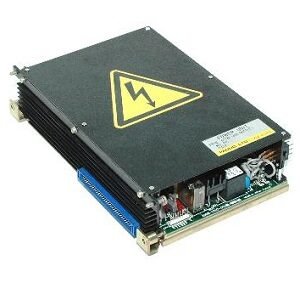
Fanuc Main Board1,376 Products
-
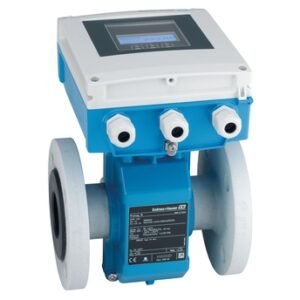
Flow Transmitter (Flow meter)552 Products
-
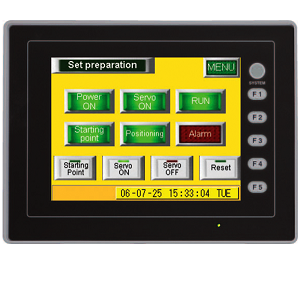
HMI/Touch Screen594 Products
-
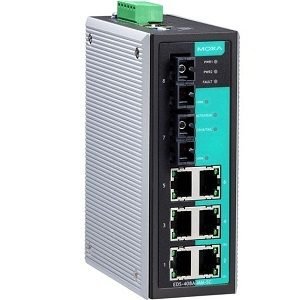
Industrial Device Servers125 Products
-
Inverter914 Products
-

Network/Signal2 Products
-

Others4,501 Products
-
Power Supply220 Products
-
Pressure Transmitter146 Products
-
Programmable Logic Controller (PLC)6,295 Products
-
Relay927 Products
-
Sensor2,221 Products
-
Servo Motors & Motor Drives5,037 Products
-
Switch897 Products
-

Timer93 Products
-

Uncategorized1,154 Products
-
Variable Frequency Drives (VFD)255 Products
-
Yokogawa Remote Indicators16 Products
Leave a Reply